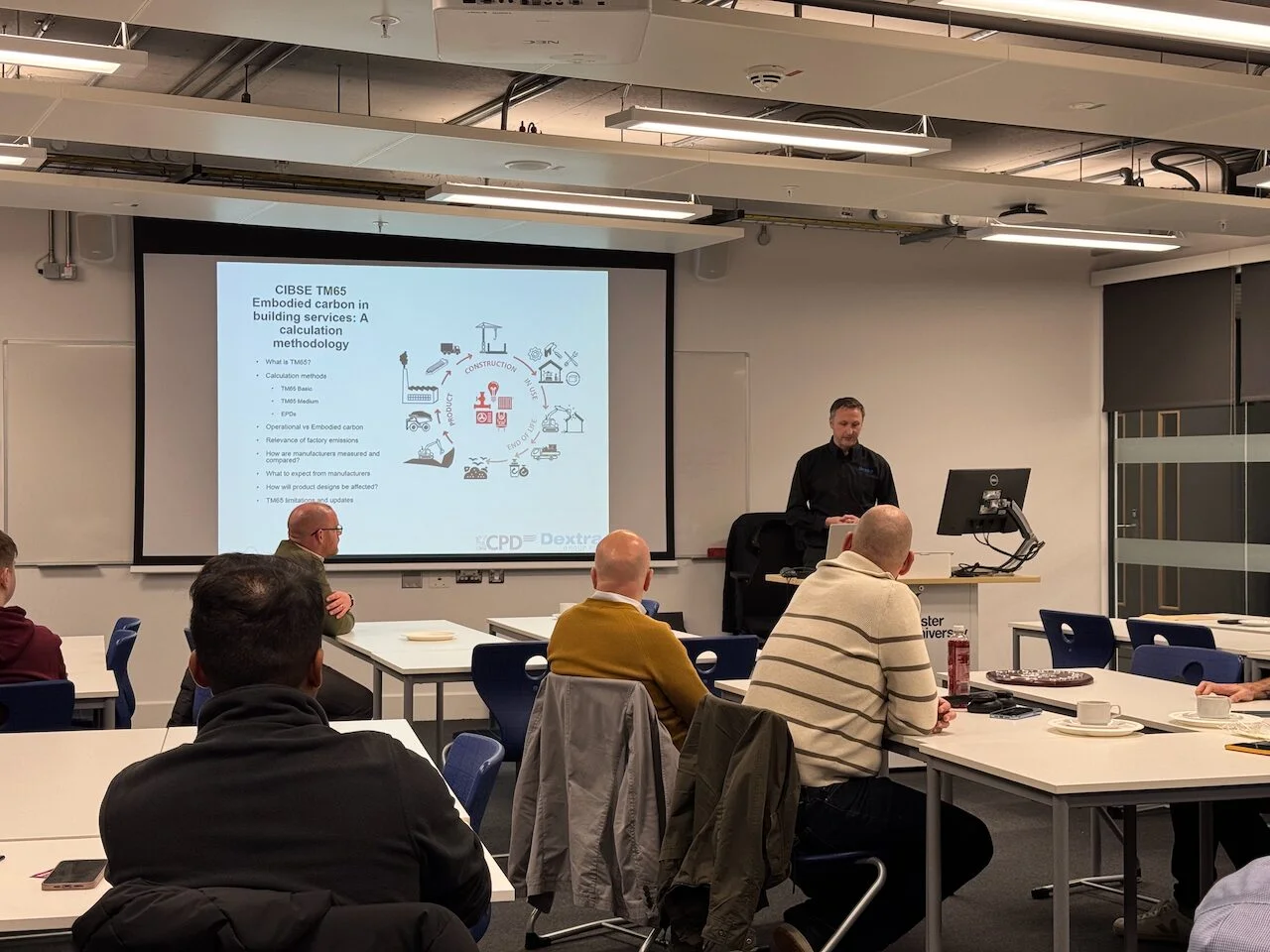
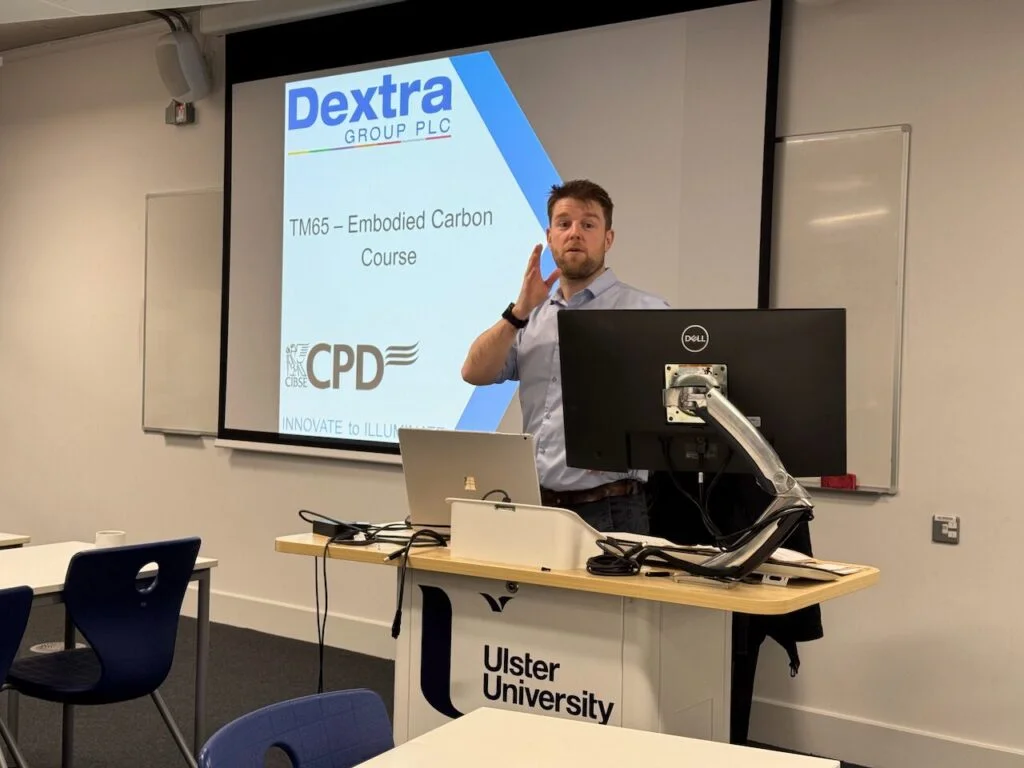
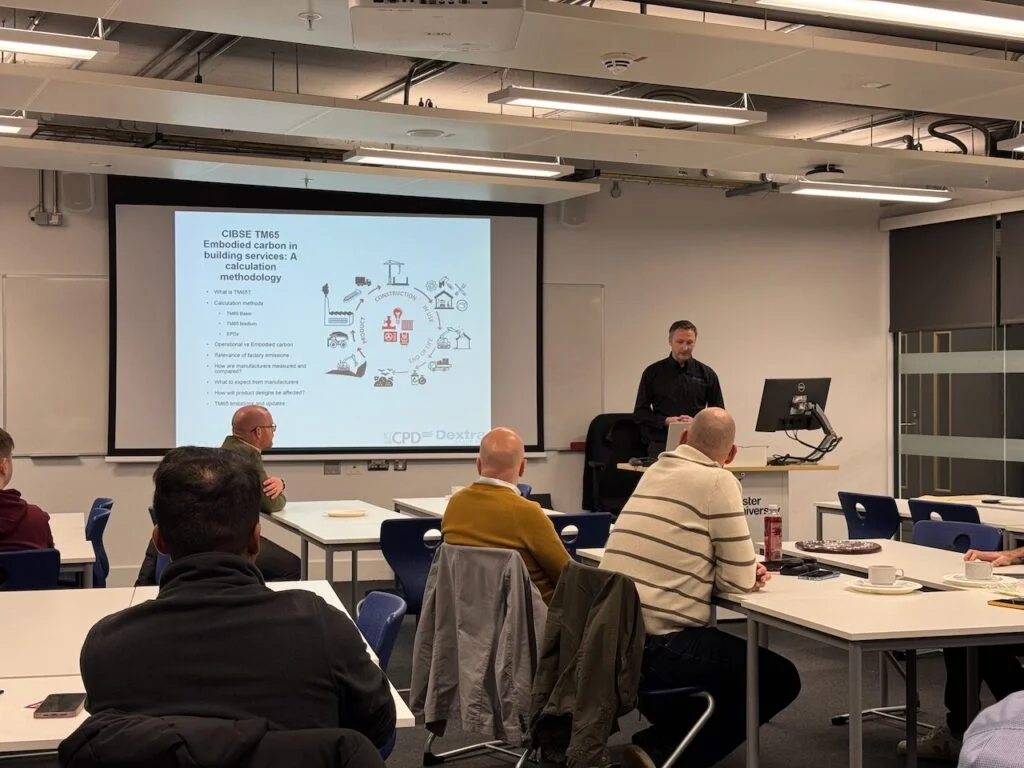
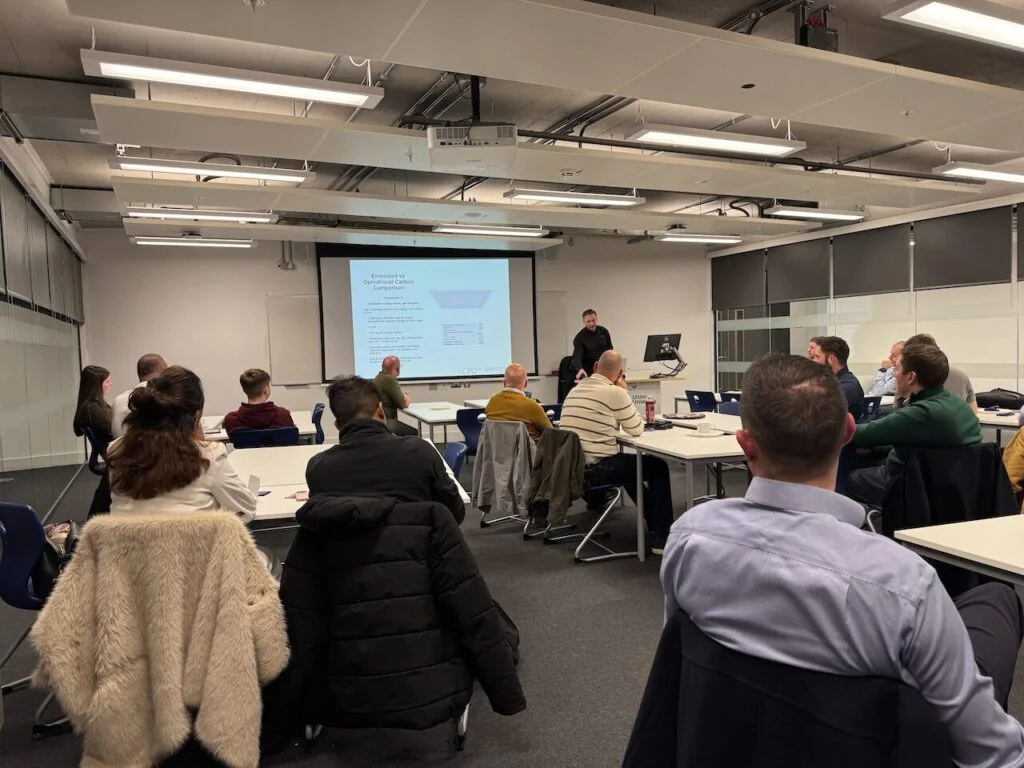
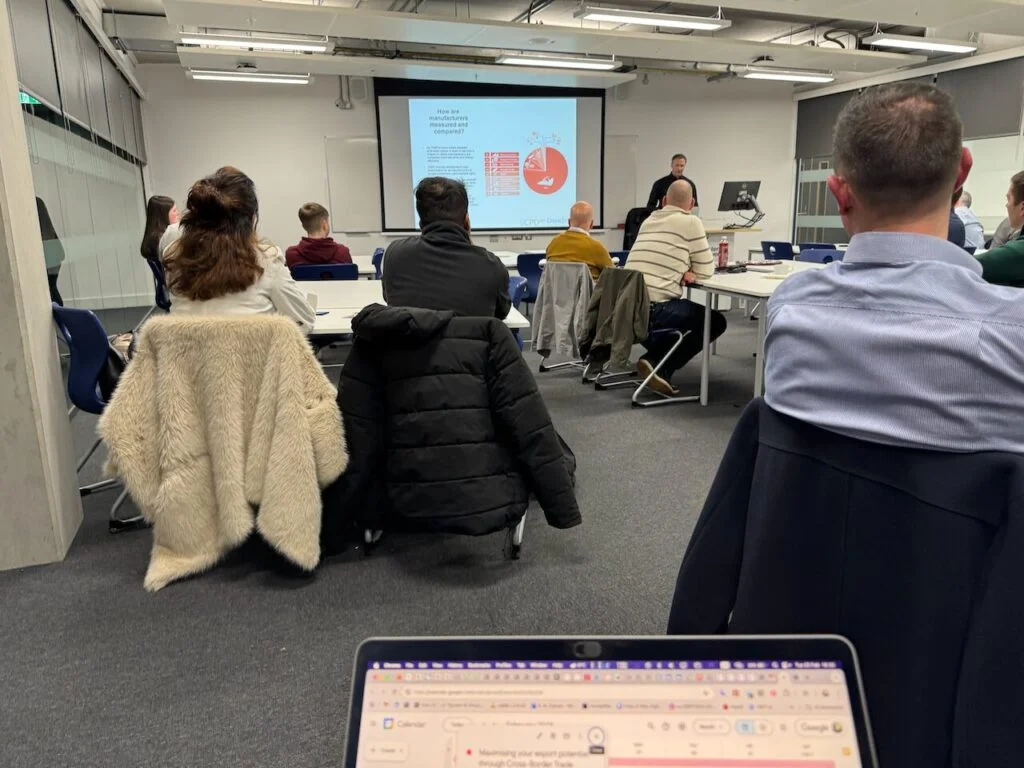
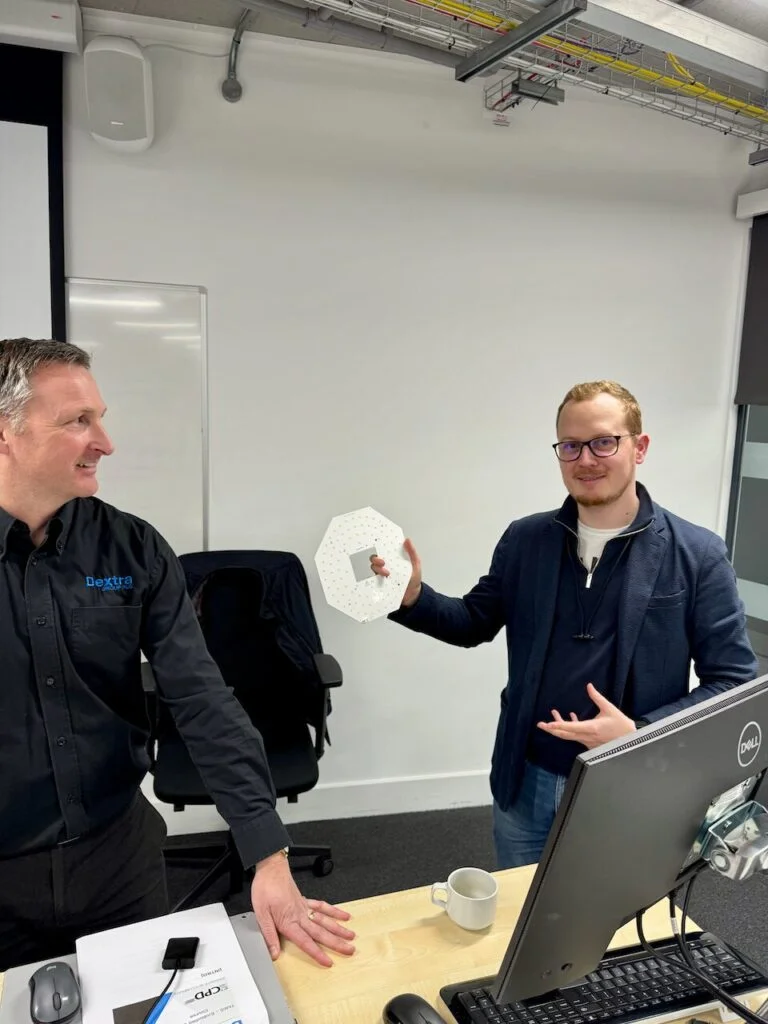
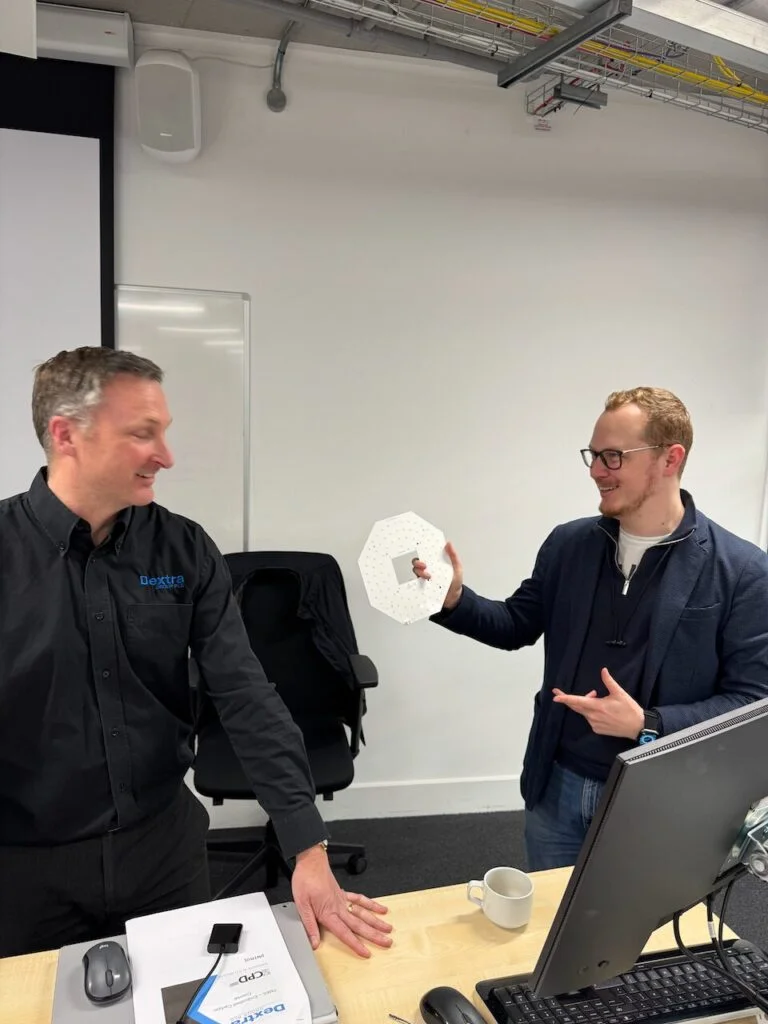
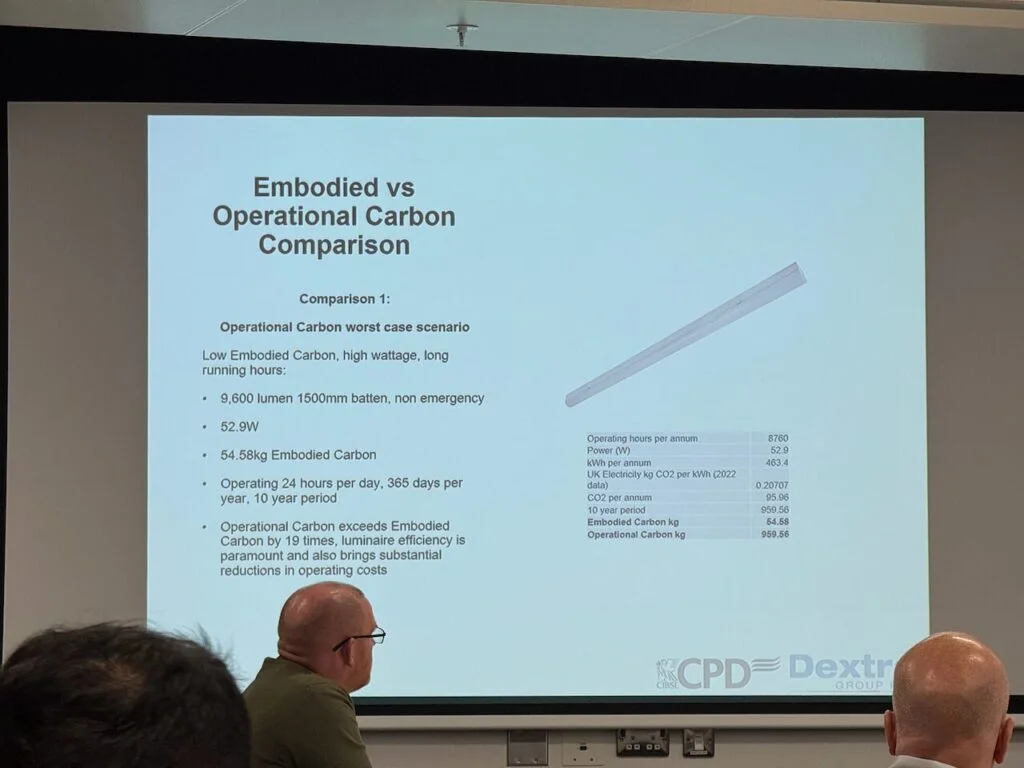
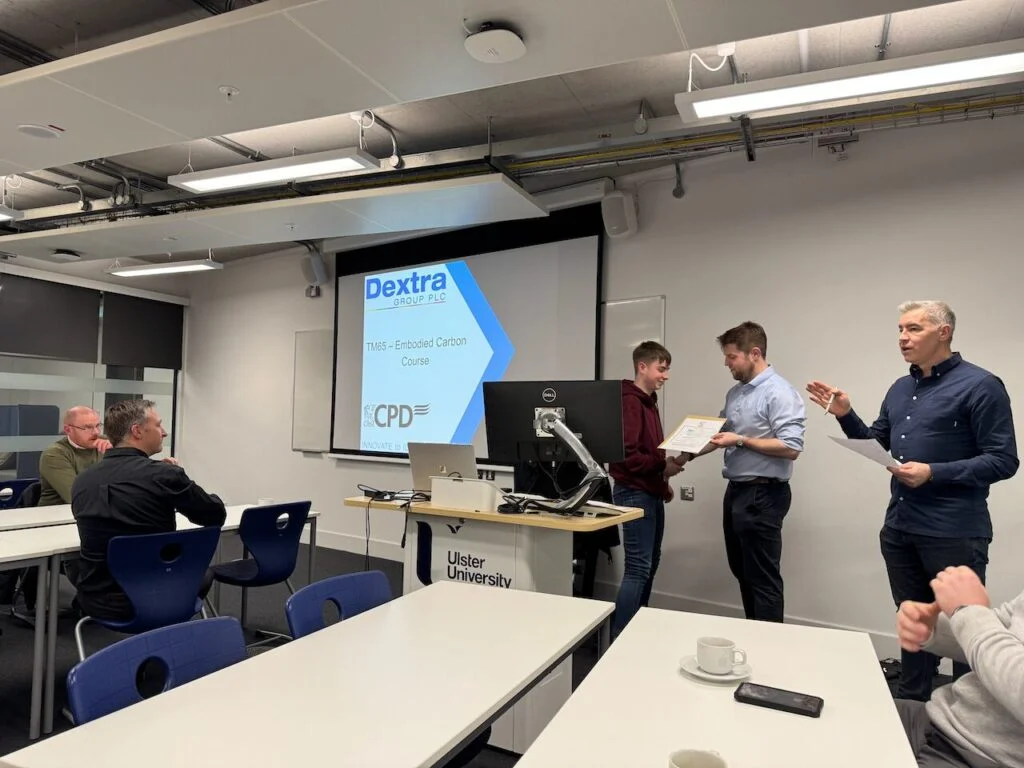
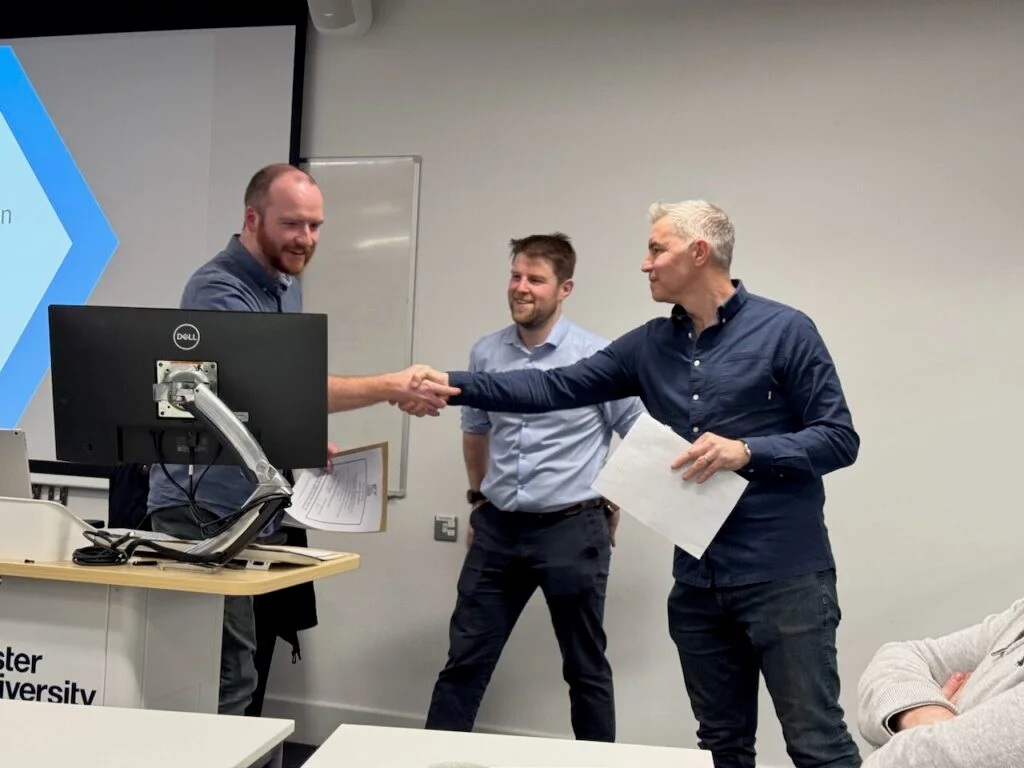
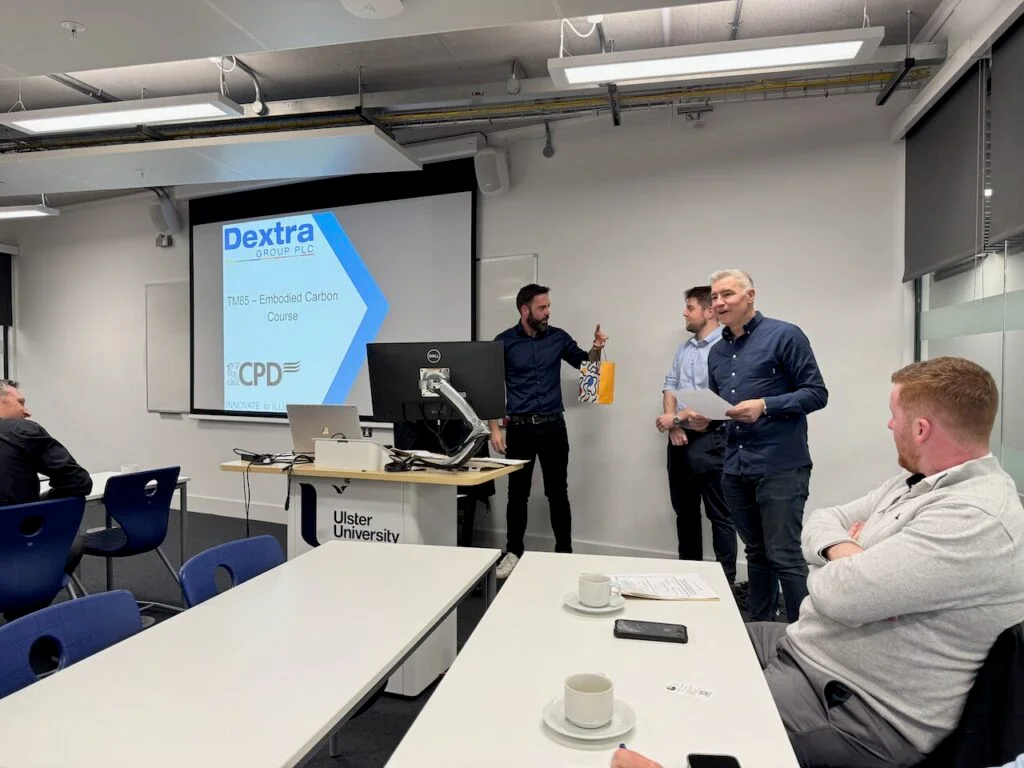
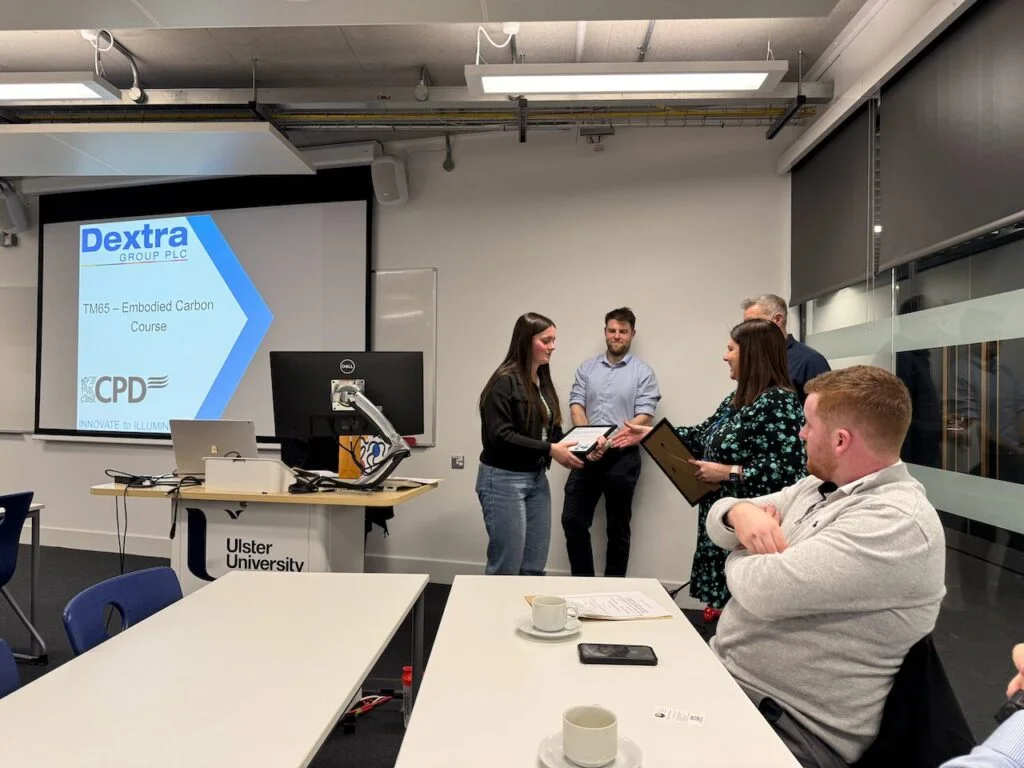
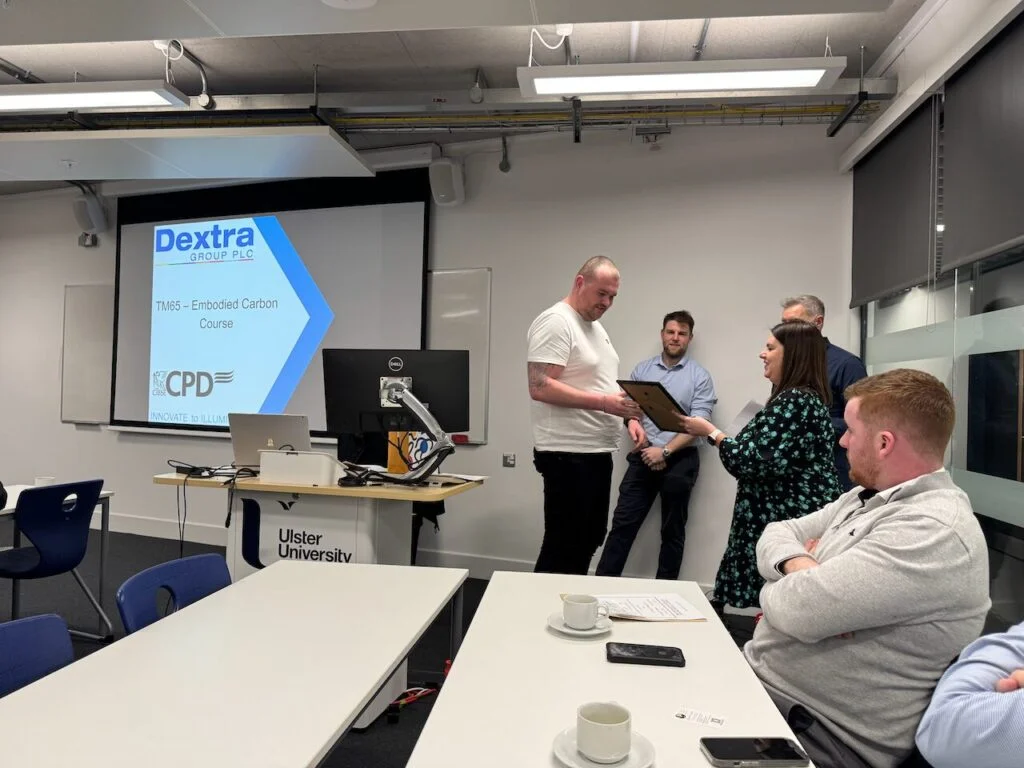
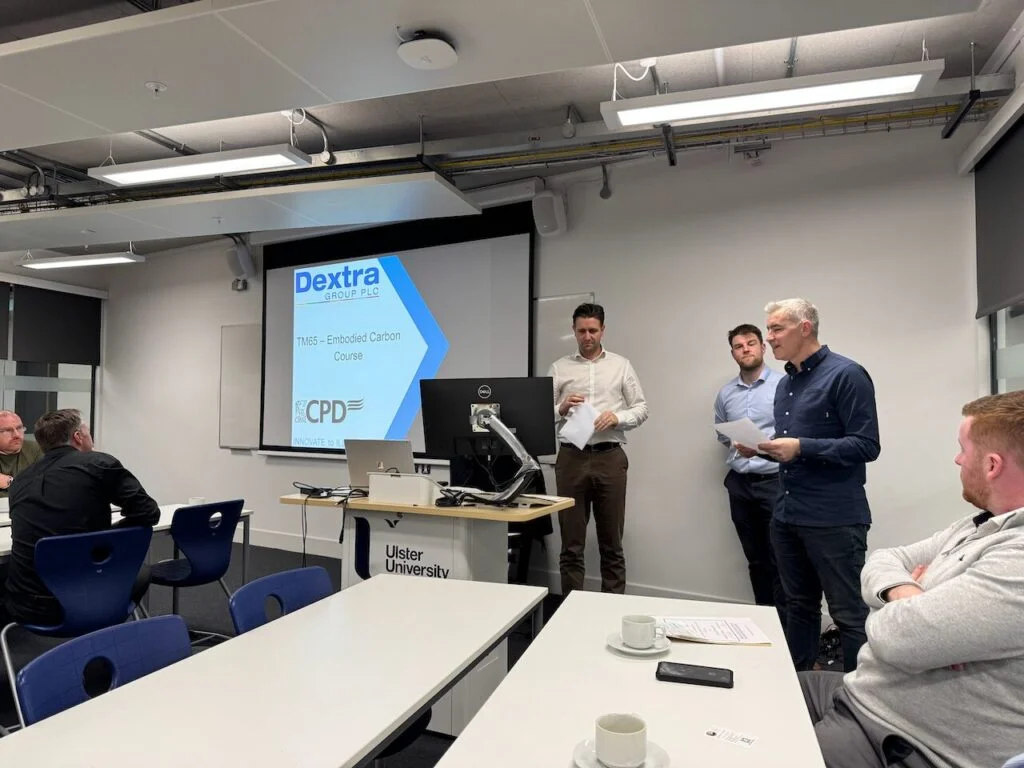
Event: TM65 – Embodied Carbon Calculation in Building Services & Student Prize Giving Date & Time:Tuesday, 25 February 2025 · 17:30–20:00 GMT Venue:Ulster University, Belfast BT15 1ED Context: CIBSE-aligned CPD delivered with Dextra Group PLC, focused on lighting, pragmatic calculations, and what this means for real projects in NI, UK, Ireland and EU.
1) Setting the scene
A full room, plenty of questions, and a topic that finally has teeth. TM65 is about estimating embodied carbon when full EPDs aren’t on the table—and then using that estimate responsibly. For us, it’s the kind of data you want sitting beside assets in a 3D Digital Twin 3D, so decisions aren’t made from gut feel but from something concrete.
2) TM65 in plain English
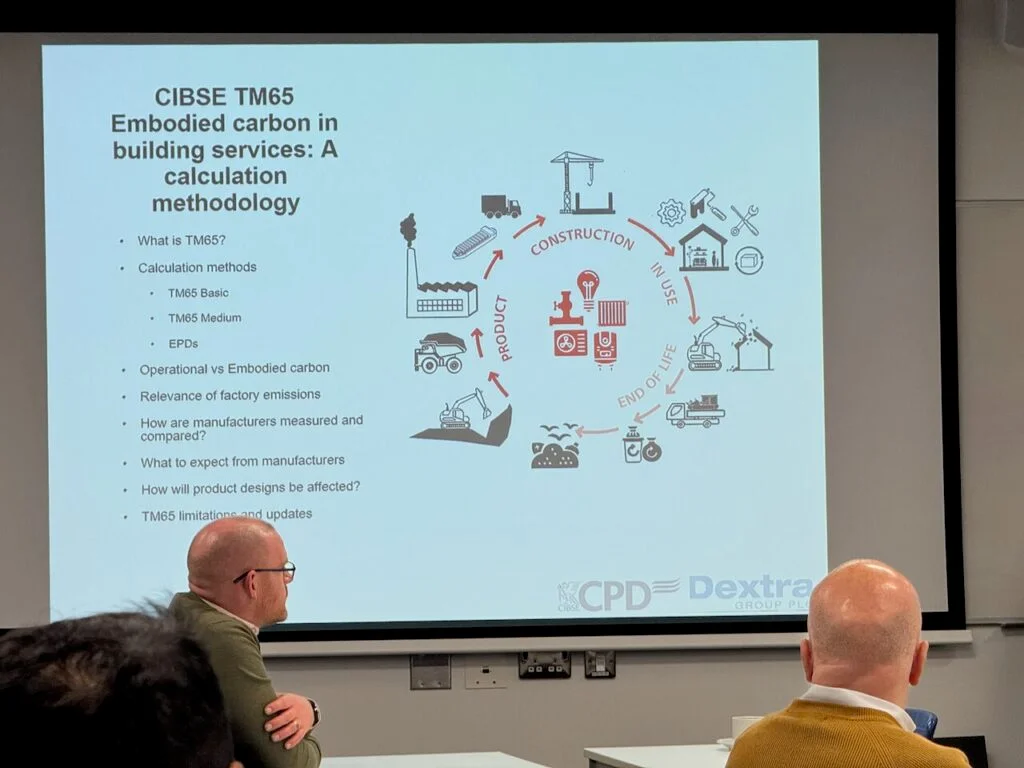
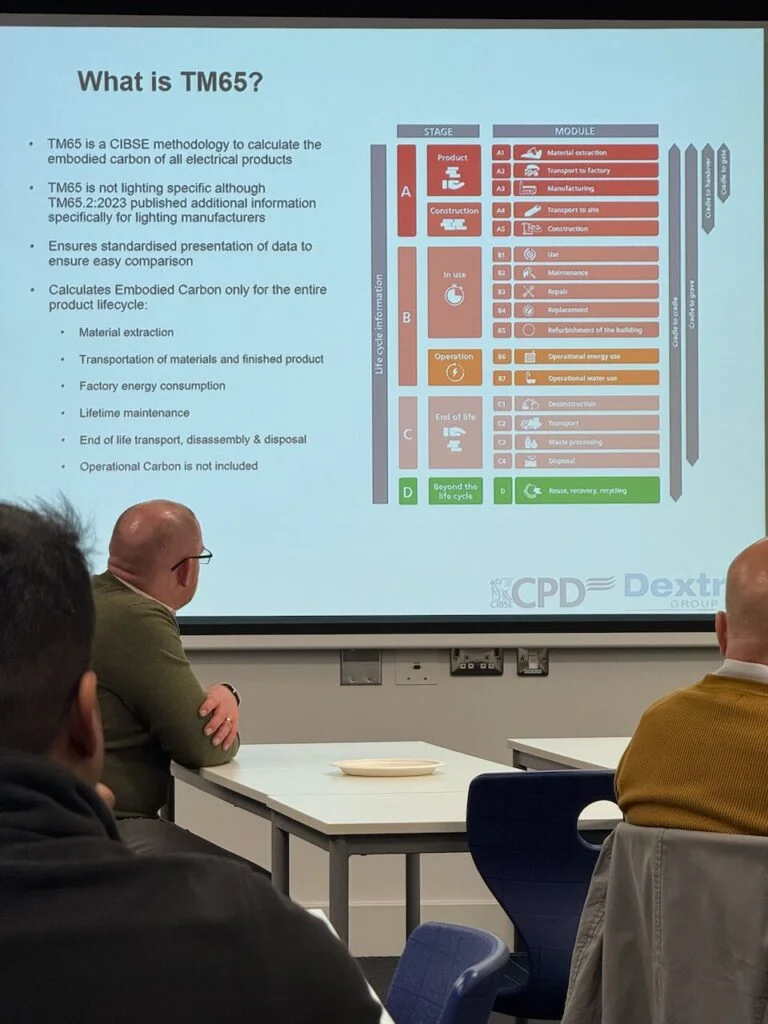
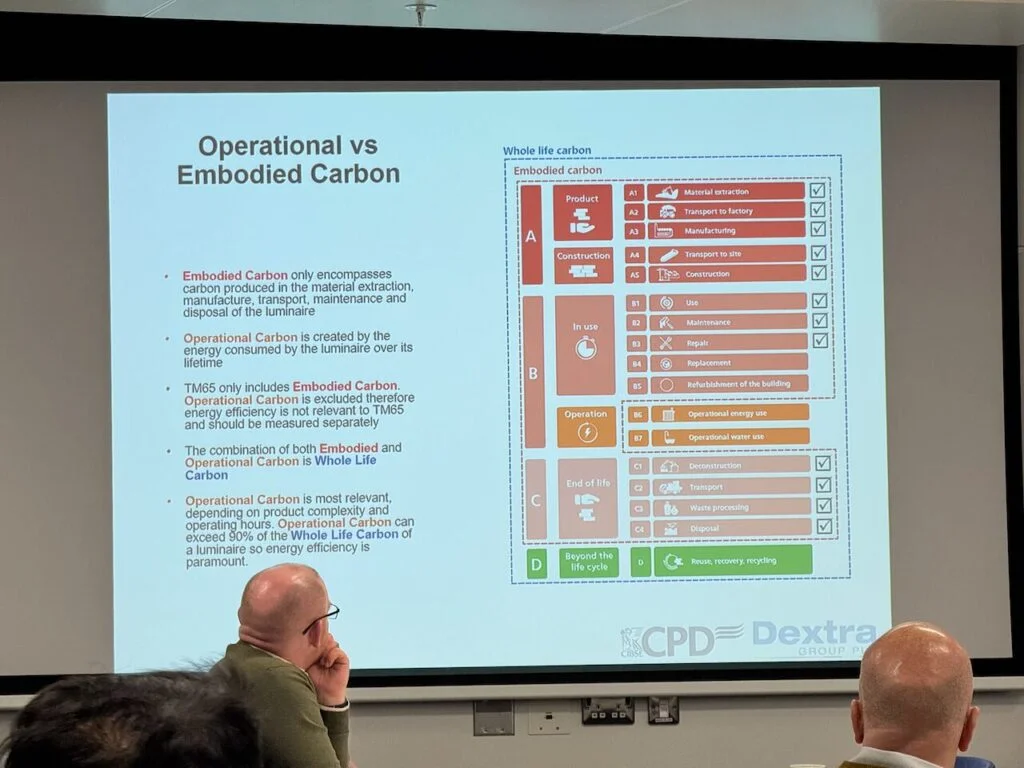
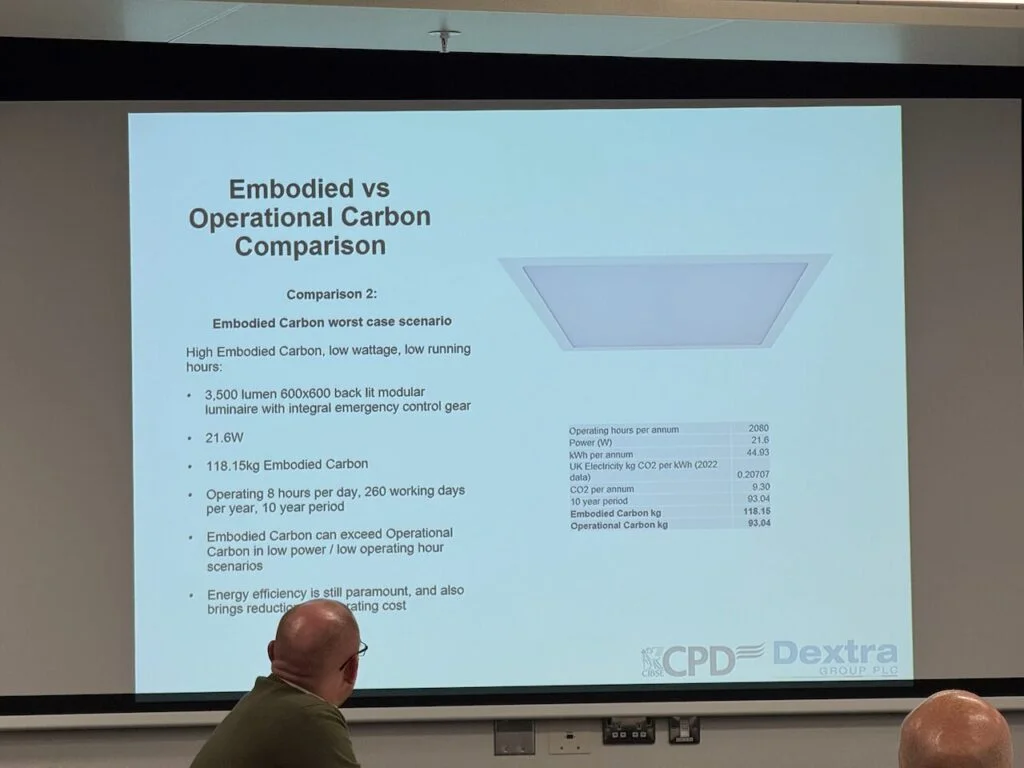
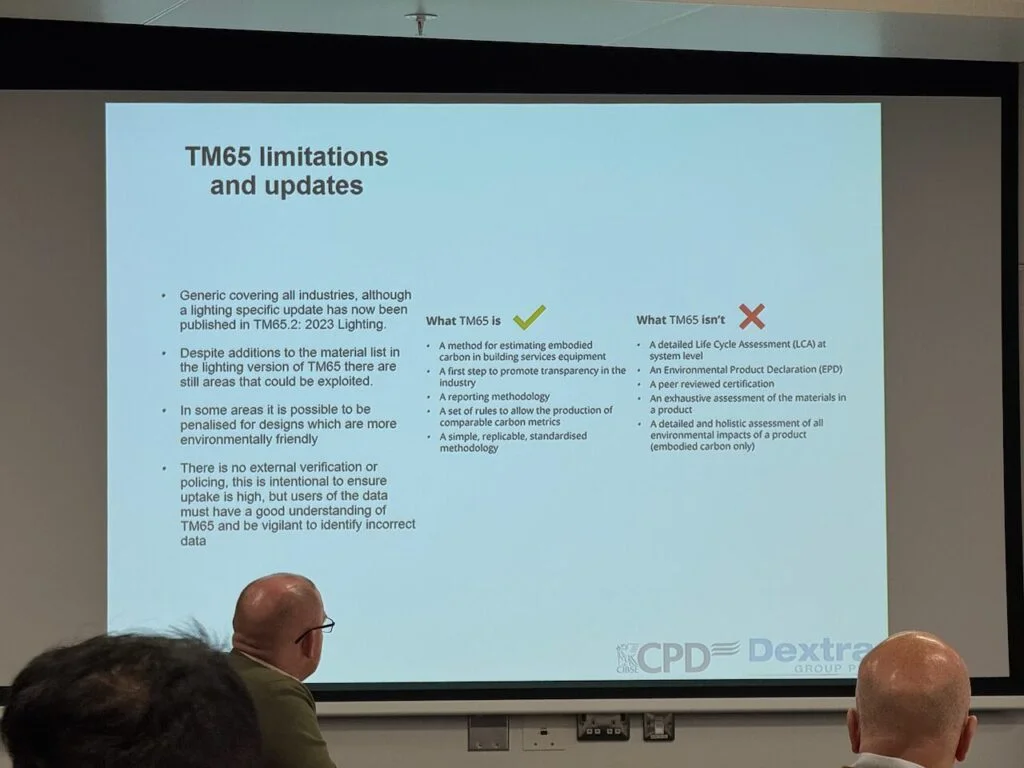
TM65 focuses mostly on A1–A3 (materials + manufacturing). It’s not a full LCA, and it’s not an EPD—but it standardises how we estimate carbon so we can compare products earlier and push manufacturers toward better disclosure.
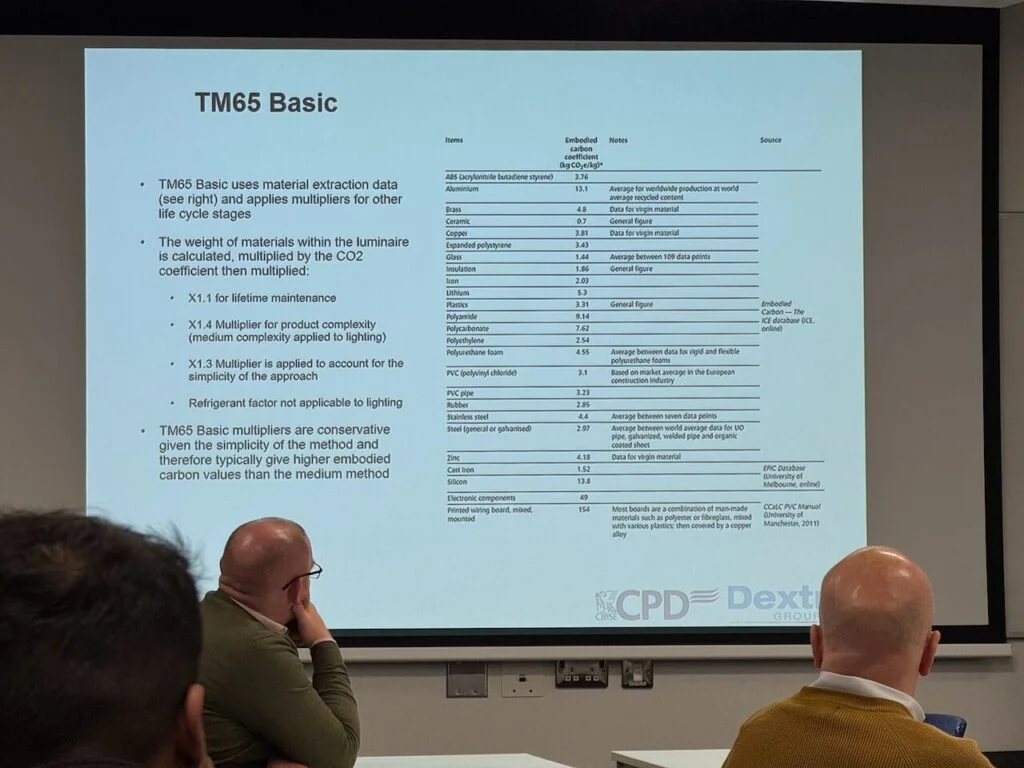
3) Route #1 — TM65 Basic
Basic uses total weight and broad material splits with standard factors plus a couple of multipliers. It’s quick and good for early design. The trade-off: uncertainty—especially around electronics.
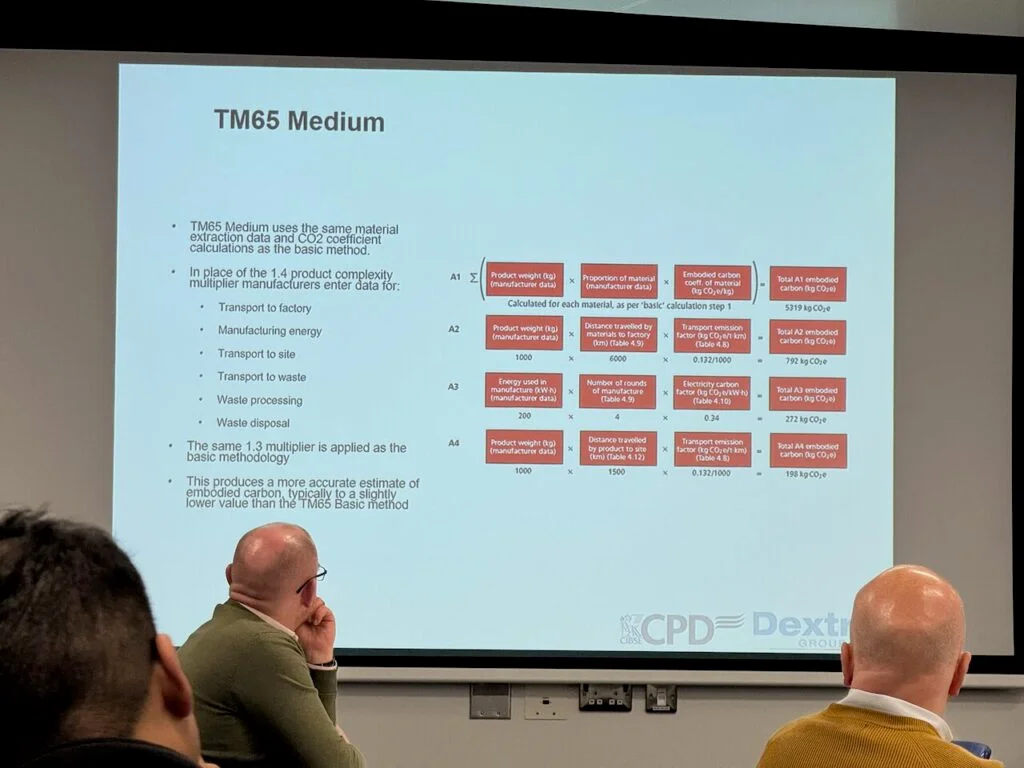
4) Route #2 — TM65 Medium
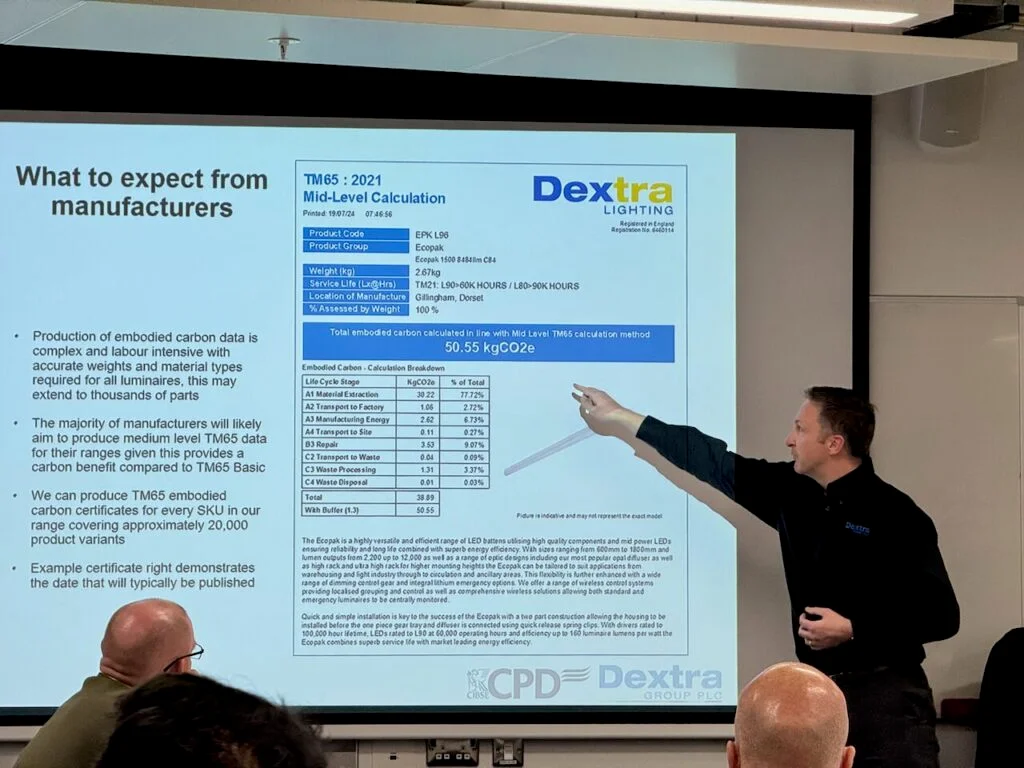
Medium swaps the “complexity” multiplier for simple, specific entries: transport to factory, manufacturing energy, transport to site, waste processing/disposal. It’s the sweet spot for tenders when you can get a short BOM from suppliers.
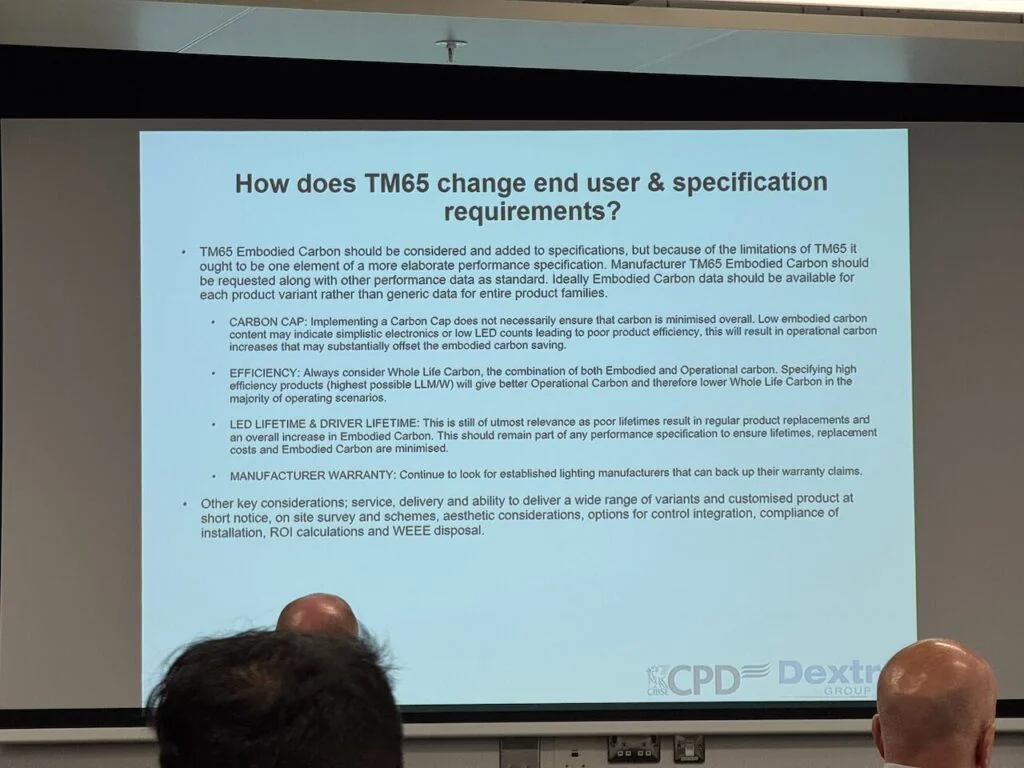
7) How to compare manufacturers fairly
To avoid apples-to-oranges:
Match function: lumen output, CCT/CRI, optics, lifetime.
Match boundaries: TM65 Basic/Medium vs EPD; list the modules.
Ask for electronics mass (drivers/boards) and materials (alloys, polymers, finishes).
Check serviceability: replaceable drivers/boards beat sealed units for life extension.
Expect an uncertainty band on TM65 estimates.
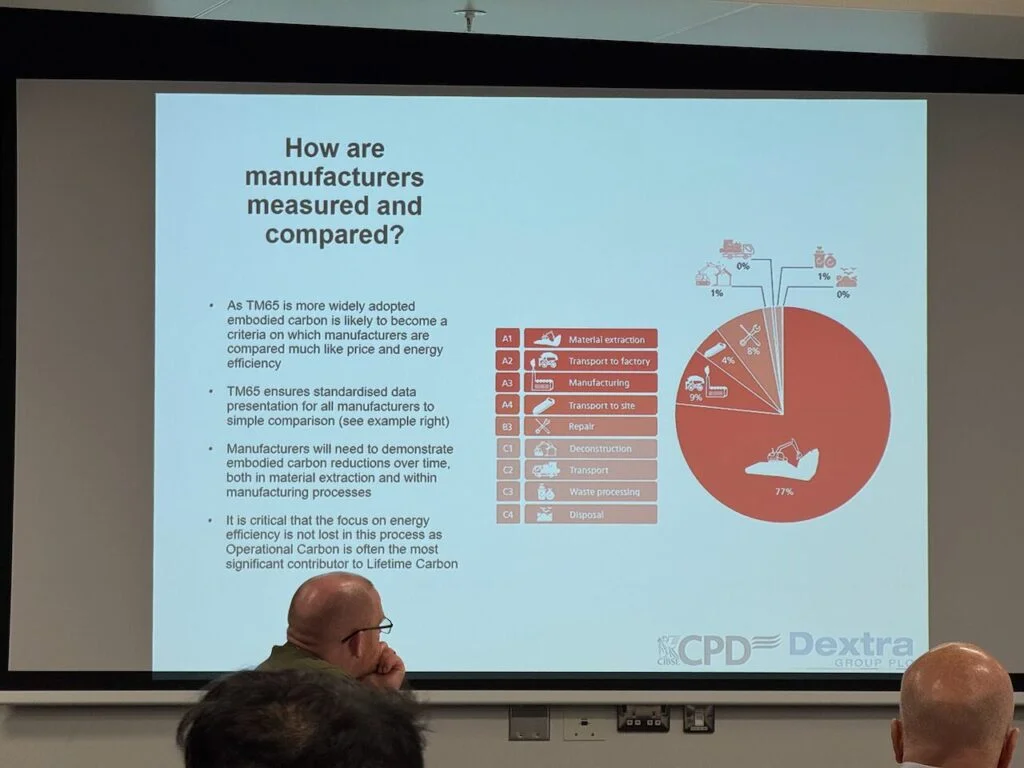
8) What to expect from manufacturers
As TM65 adoption grows, brands will publish Medium-level certificates per SKU and be challenged to improve them over time. That’s the direction of travel.
9) How product design will change
Expect more design-for-disassembly, higher recycled aluminium, simpler polymers, and a push to right-size luminaires so you need fewer of them. Also: be thoughtful with integral emergency—it adds mass, so use where it truly helps.
10) The honest limits
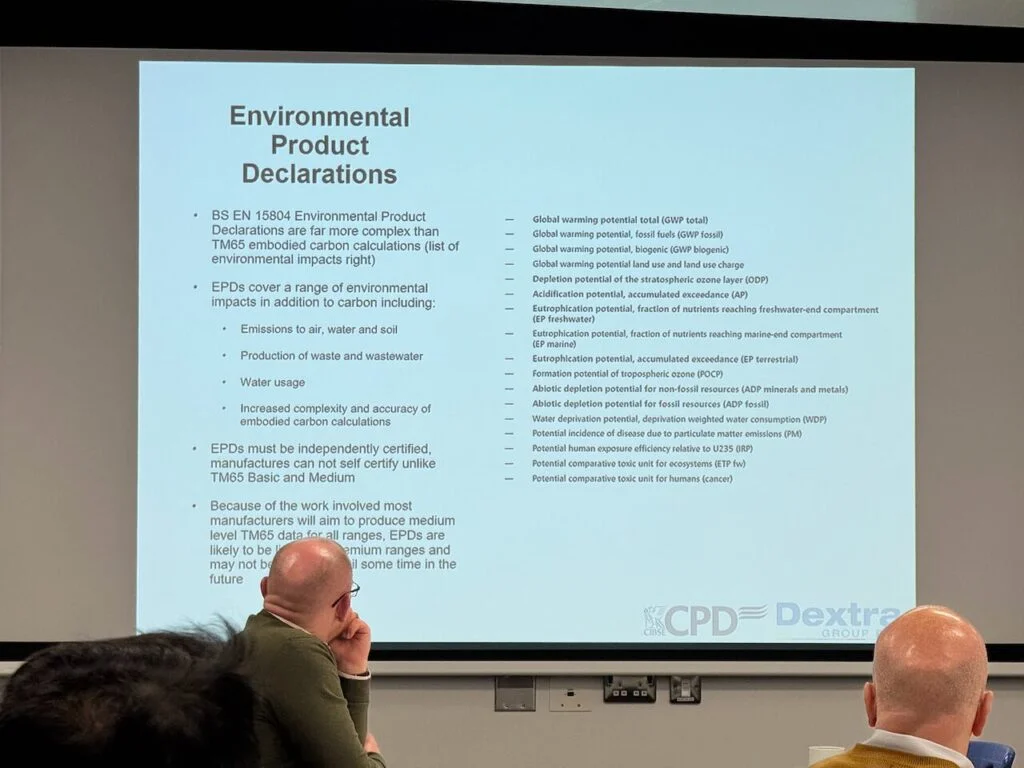
TM65 is a helpful estimate, not a whole-life answer. Electronics can be under-represented in Basic; comparisons go sideways if scopes don’t match; and, unless verified (like an EPD), data is self-declared. Note it, use it, and keep the context visible.
13) Where this meets Digital Strada’s 3D Digital Twins 3D & Facility Management Assets
Capture once, trust always. We use LiDAR scanning to capture buildings accurately and build clear 3D Digital Twins 3D. From that, we deliver the essential CAD/BIM drawings and a clean asset register—so every luminaire, driver and emergency pack is recorded in the right room with the right notes. TM65/EPD details (where available) sit beside each asset in plain language, making choices faster and easier during design reviews and refurb cycles.
Make day-to-day FM simpler. Facilities teams don’t need to hunt through PDFs and emails. In the twin, you can pull up a space, see what’s installed, check service notes/warranty, and view simple carbon info when planning replacements. It’s a straightforward way to balance reliability, cost and carbon without getting tangled in spreadsheets.
Handovers that actually help. Each project handover includes the twin, the drawings, and tidy asset schedules—ready for operations. That consistency makes audits painless and lets you line up like-for-like upgrades across the portfolio when standards or hours change. It’s a practical, low-friction path to smarter maintenance and lower whole-life impact.
14) Ready to make this real? (CTA)
✨ See what we already do
3D Digital Twins 3D — examples, use-cases, and sectors we serve: /3d-digital-twins/