Hi—I’m Emil Indricau, founder of Digital Strada. I spend a lot of time pressure-testing AI tools that can cut build time without sacrificing quality. Lovable (by Vibe Coding) is one of the most useful “chat-to-app” builders I’ve used lately—great for MVPs, internal tools, and marketing sites when speed matters.
Exclusive deal: Sign up via my affiliate link and receive free bonus credits applied to your account automatically. 👉 Claim your free Lovable credits (Transparency: This is an affiliate link. I may earn a commission at no extra cost to you.)
What is Lovable?
Lovable is an AI-powered app builder. You describe what you want in natural language; Lovable scaffolds the front end, back end, auth, and integrations, then lets you iterate conversationally—or drop into code when you need precision.
Key features & benefits
Chat-to-App: From a one-line brief to a working prototype in minutes
Design-friendly: Import from Figma or start with templates; refine visually
Integrations: Supabase (DB/auth), Stripe (payments), OpenAI/Anthropic (AI), GitHub, and more
One-click Deploy: Share a URL; connect a custom domain when ready
Code Mode (paid): Inspect and edit the generated code—no black box
Best for
Solopreneurs, marketers, and product teams validating flows quickly
Data-centric apps where Supabase/Stripe are common choices
Your free credits appear in the account billing/credits panel automatically
Start building—credits are consumed when you generate/iterate
No coupon code needed. If there’s a time-limited boost promo running, you’ll usually see it in-app during sign-up.
Quick Start: Your First Hour with Lovable
0–10 min: Use the link to sign up and open a new project. Write a one-sentence brief (e.g., “A project tracker with photo uploads, roles, and CSV export”).
10–25 min: Ask Lovable to scaffold DB tables, auth, and CRUD views; preview the running app.
25–40 min: Import a Figma layout or pick a template; tighten copy and layout sections.
40–60 min: Add Stripe (if needed), set environment variables, and deploy to a shareable URL.
Sensible defaults for Supabase/Stripe/OpenAI workflows
Cons
Free-tier credit limits cap longer sessions—expect to upgrade if building seriously
AI generations are excellent starts, but still need review/cleanup
Third-party integrations require you to manage keys and settings
My take: If speed to proof is your priority and you’re comfortable iterating with prompts (plus occasional code), Lovable is one of the best-balanced options right now.
Comparison: Lovable vs. Bolt.new vs. Cursor
Note: Pricing/tiers evolve—treat the “Free/Intro” row as directional and confirm on the official sites.
Tool
How you build
Best for
Free/Intro (typical)
Time-to-MVP (typical)
Code ownership
Notes
Lovable
Chat-to-app + visual edits; optional Code Mode
MVPs, internal tools, design-led sites
Free tier with daily credits; paid for more & Code Mode
Deep control; less “turnkey deploy” out of the box
Bottom line:
Want fastest concept-to-demo with a design path? → Lovable
Prefer a repo-first codegen workflow? → Bolt.new
Already live in an IDE and want AI woven into editing? → Cursor
FAQ (Short & Clear)
Do I need a coupon code? No—use the affiliate link and the credits are applied automatically.
How many free credits do I get? Lovable offers a free tier with daily credits; sign-up via the affiliate link also grants bonus credits. Check your Billing/Credits panel for the current amounts.
What happens when I run out of credits? You can wait for the daily refill or upgrade to a paid plan for larger sessions and features like Code Mode.
Can I edit the generated code? Yes—Code Mode (on paid tiers) lets you inspect and edit code directly.
Does Lovable replace a developer? It accelerates scaffolding and iterations. For production-critical work, plan a developer review cycle.
How do Supabase/Stripe integrations work? Lovable scaffolds the integration points; you supply API keys, environment variables, and project settings.
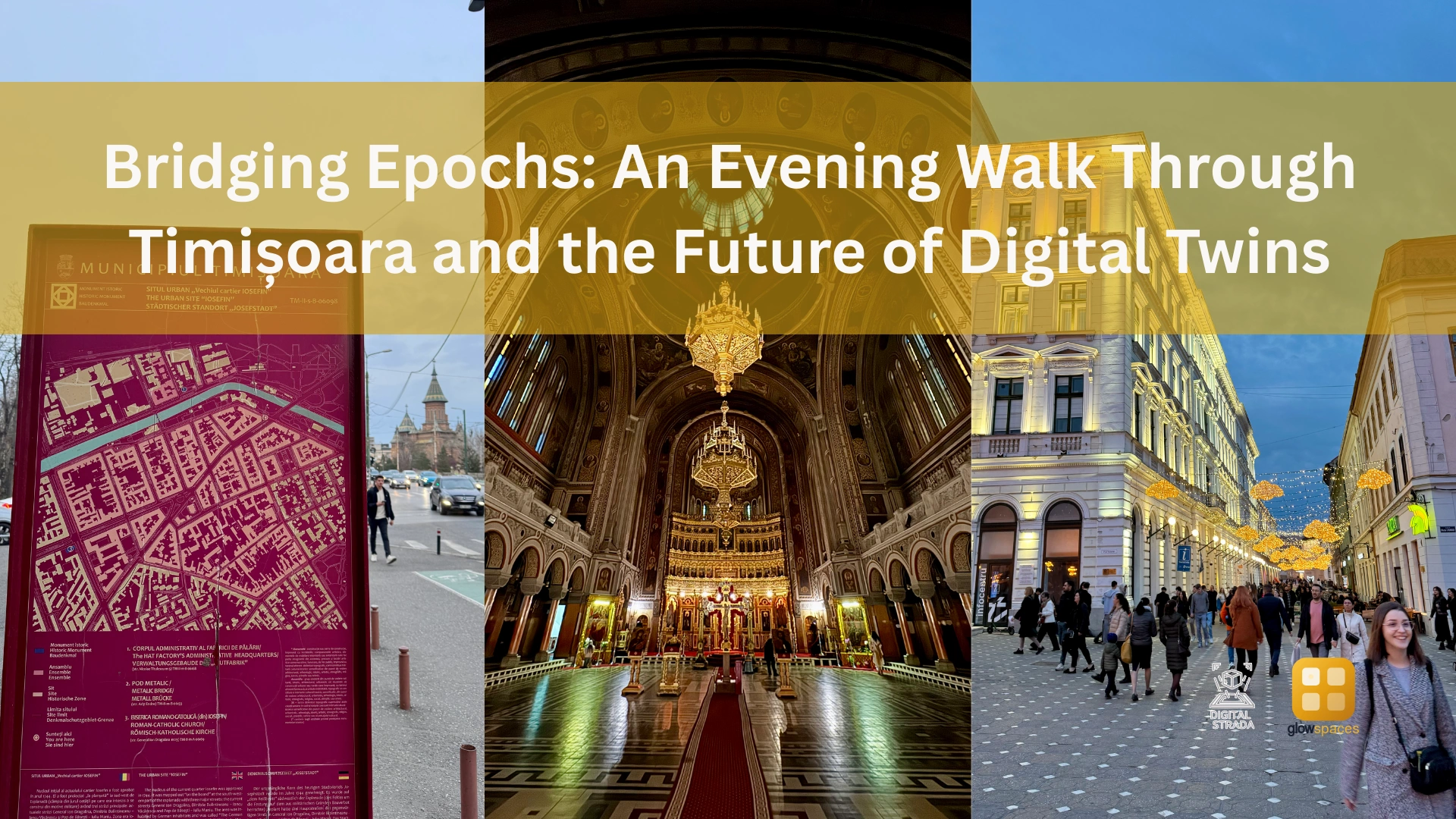
🏛️ The physical architecture of a metropolis functions as a silent, immutable chronicle of its historical evolution, and nowhere within Eastern Europe is this architectural dialogue more profoundly articulated than in the city of Timișoara. Defined by an unparalleled density of built heritage, the urban center holds the largest ensemble of buildings classified as historical monuments in Romania. On the evening of March 17, 2026, just hours before the inaugural “Immersive Heritage 2026” conference at the Politehnica University of Timișoara (UPT), I took a quiet walk through the city’s historic core. As dusk settled over Piața Victoriei and the Bega River canal, I captured the intricate Baroque and Secessionist facades with my camera. These casual evening photos serve as a powerful reminder of what we are fighting to preserve, and they perfectly frame the conversations we will be having over the next three days at the conference.
📸 Traditional methodologies of architectural documentation, historically reliant on two-dimensional blueprints and standard optical photography, consistently fail when confronted with the hyper-complex geometries of structures such as the illuminated Opera House or the monumental Metropolitan Orthodox Cathedral I admired last night. The visual beauty of these structures explicitly underscores the technological imperative for millimeter-accurate 3D Reality Capture. By envisioning the deployment of advanced Terrestrial Laser Scanning (TLS) networks fused with high-density LiDAR, the digital documentation process evolves beyond mere aesthetic visualization. At Digital Strada, we are actively constructing the “Golden Thread” of spatial data—an unalterable, mathematically precise digital shadow of the physical asset that guarantees structural integrity over time.
💻 This meticulous reality capture vision culminates in the generation of Heritage Building Information Models (HBIM), which now serve as the indispensable bedrock for all modern restoration and conservation efforts. By generating highly accurate point clouds, preservationists, structural engineers, and municipal architects are provided with a singular, incontrovertible source of truth. This technological paradigm shift entirely eliminates the costly guesswork inherent in the adaptive reuse of historic structures. It facilitates non-destructive structural analysis, enables advanced clash detection before physical construction begins, and allows for the seamless, invisible integration of modern technological amenities within highly protected historic shells.
🏢 However, the preservation of cultural heritage cannot exist in a financial vacuum; it demands sustainable, data-driven economic models to attract institutional capital. It is precisely at this intersection that the profound synergy between Digital Strada’s rigorous spatial capture and the GlowSpaces AI platform becomes evident. While Digital Strada architects the high-fidelity digital twin, the GlowSpaces intelligence engine ingests this raw spatial data to execute institutional-grade financial modeling. For real estate developers and urban planners seeking to revitalize Timișoara’s derelict palaces or industrial warehouses, GlowSpaces provides unparalleled predictive valuation and Capital Expenditure (CapEx) intelligence.
💡 By instantaneously cross-referencing proposed 3D layout alterations with real-time local contractor rates, wholesale material pricing, and strict regional heritage permit requirements, the platform generates precise, line-item renovation cost analyses. This transformative capability shifts a historic building from being viewed as a high-risk preservation liability into a verified, risk-mitigated financial asset, complete with a clearly defined spatial Return on Investment (ROI).
🚀 The timing of this evening walk was the perfect mental primer for the “Immersive Heritage” conference at UPT. The symposium focuses intently on how immersive technologies—spanning XR, AR, and VR—can radically transform historical sites into cutting-edge educational and research environments. Digital Strada’s documented successes in the region, including the precise digital twin and ClassVR integration for the “Sf. Ilie” Church, serve as practical, scalable blueprints for community engagement. Through the application of 3D Digital Twins, HBIM, and AI-driven PropTech, we are not merely preserving the past we admire on an evening stroll; we are actively architecting the digital infrastructure required to sustain Timișoara’s cultural and economic supremacy for the next century.
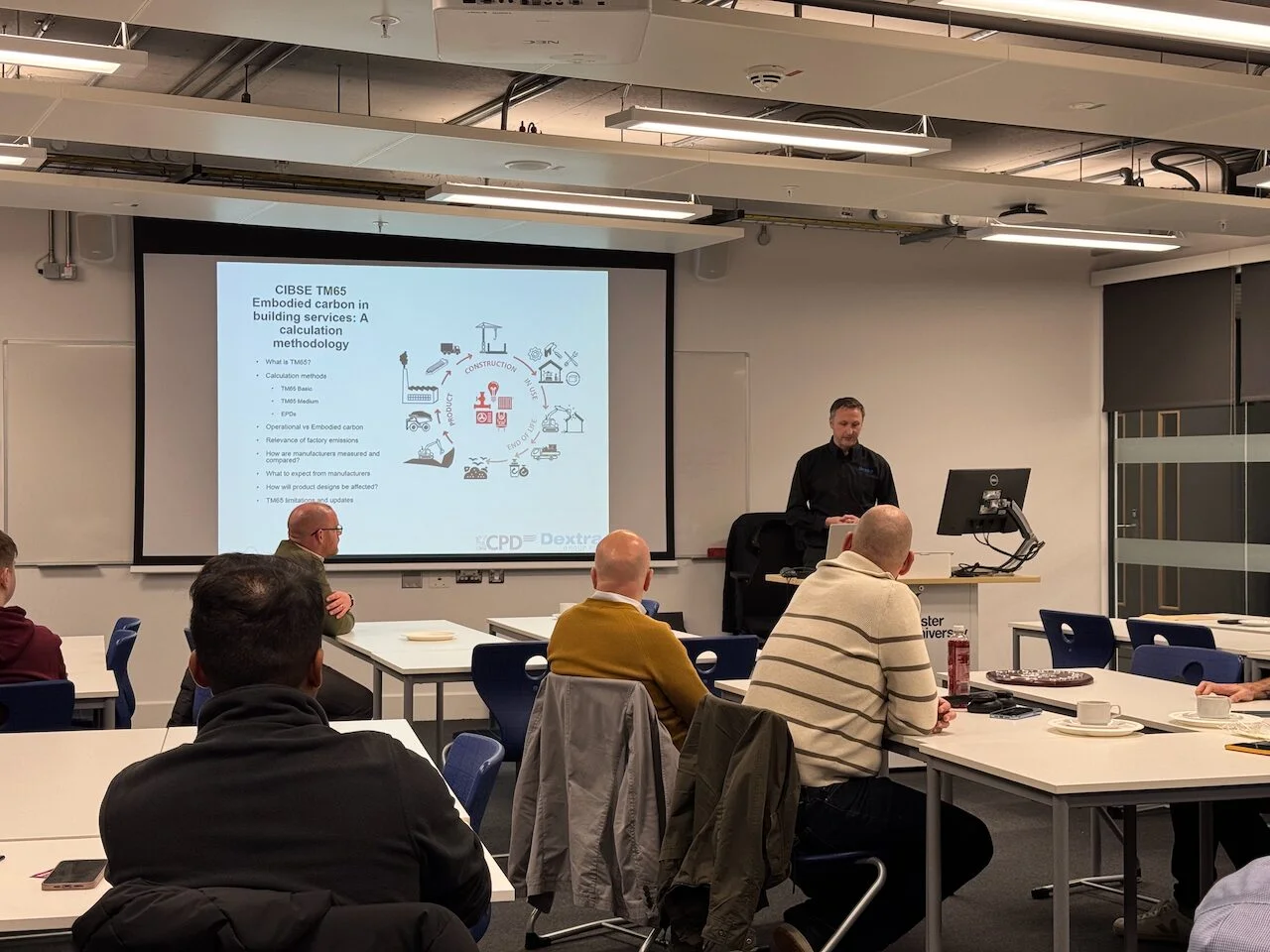
Event: TM65 – Embodied Carbon Calculation in Building Services & Student Prize Giving Date & Time:Tuesday, 25 February 2025 · 17:30–20:00 GMT Venue:Ulster University, Belfast BT15 1ED Context: CIBSE-aligned CPD delivered with Dextra Group PLC, focused on lighting, pragmatic calculations, and what this means for real projects in NI, UK, Ireland and EU.
1) Setting the scene
A full room, plenty of questions, and a topic that finally has teeth. TM65 is about estimating embodied carbon when full EPDs aren’t on the table—and then using that estimate responsibly. For us, it’s the kind of data you want sitting beside assets in a 3D Digital Twin, so decisions aren’t made from gut feel but from something concrete.
2) TM65 in plain English
TM65 focuses mostly on A1–A3 (materials + manufacturing). It’s not a full LCA, and it’s not an EPD—but it standardises how we estimate carbon so we can compare products earlier and push manufacturers toward better disclosure.
3) Route #1 — TM65 Basic
Basic uses total weight and broad material splits with standard factors plus a couple of multipliers. It’s quick and good for early design. The trade-off: uncertainty—especially around electronics.
4) Route #2 — TM65 Medium
Medium swaps the “complexity” multiplier for simple, specific entries: transport to factory, manufacturing energy, transport to site, waste processing/disposal. It’s the sweet spot for tenders when you can get a short BOM from suppliers.
5) Route #3 — EPDs
EPDs (EN 15804) are independent, cover more impacts, and spell out exactly which modules are in scope. When you have an EPD, use it. When you don’t, TM65 is your lifeline—just keep the boundaries straight.
6) Why operational often dwarfs embodied (and when it doesn’t)
TM65 excludes operational electricity. That’s not a flaw; it’s a boundary. But you need to keep it in mind:
Example A (operational dominates): a 1500 mm batten at ~52.9 W, running 24/7 for 10 years on a typical UK grid ends up around 960 kgCO₂e in use vs ~55 kgCO₂e embodied—roughly 19× higher.
Example B (embodied can dominate): a 600×600 modular panel with integral emergency gear, 21.6 W, used ~2,080 h/yr for 10 years can show embodied (~118 kg) overtaking operational (~93 kg).
7) How to compare manufacturers fairly
To avoid apples-to-oranges:
Match function: lumen output, CCT/CRI, optics, lifetime.
Match boundaries: TM65 Basic/Medium vs EPD; list the modules.
Ask for electronics mass (drivers/boards) and materials (alloys, polymers, finishes).
Check serviceability: replaceable drivers/boards beat sealed units for life extension.
Expect an uncertainty band on TM65 estimates.
8) What to expect from manufacturers
As TM65 adoption grows, brands will publish Medium-level certificates per SKU and be challenged to improve them over time. That’s the direction of travel.
9) How product design will change
Expect more design-for-disassembly, higher recycled aluminium, simpler polymers, and a push to right-size luminaires so you need fewer of them. Also: be thoughtful with integral emergency—it adds mass, so use where it truly helps.
10) The honest limits
TM65 is a helpful estimate, not a whole-life answer. Electronics can be under-represented in Basic; comparisons go sideways if scopes don’t match; and, unless verified (like an EPD), data is self-declared. Note it, use it, and keep the context visible.
11) Five simple moves to cut whole-life carbon
Meet the standard, don’t overshoot illuminance.
Cut hours with daylight and presence controls, plus practical schedules.
Choose serviceable luminaires with replaceable drivers/boards and a spares plan.
Prefer recycled/mono-materials, minimal coatings.
Ask early for data: EPDs where possible; otherwise TM65 Medium with assumptions noted.
12) Student Prize Giving
The best part of the evening? Seeing students celebrated for exactly the kind of thinking the industry needs—repairability, sensible materials, clear reporting. The future looks capable.
13) Where this meets Digital Strada’s 3D Digital Twins & Facility Management Assets
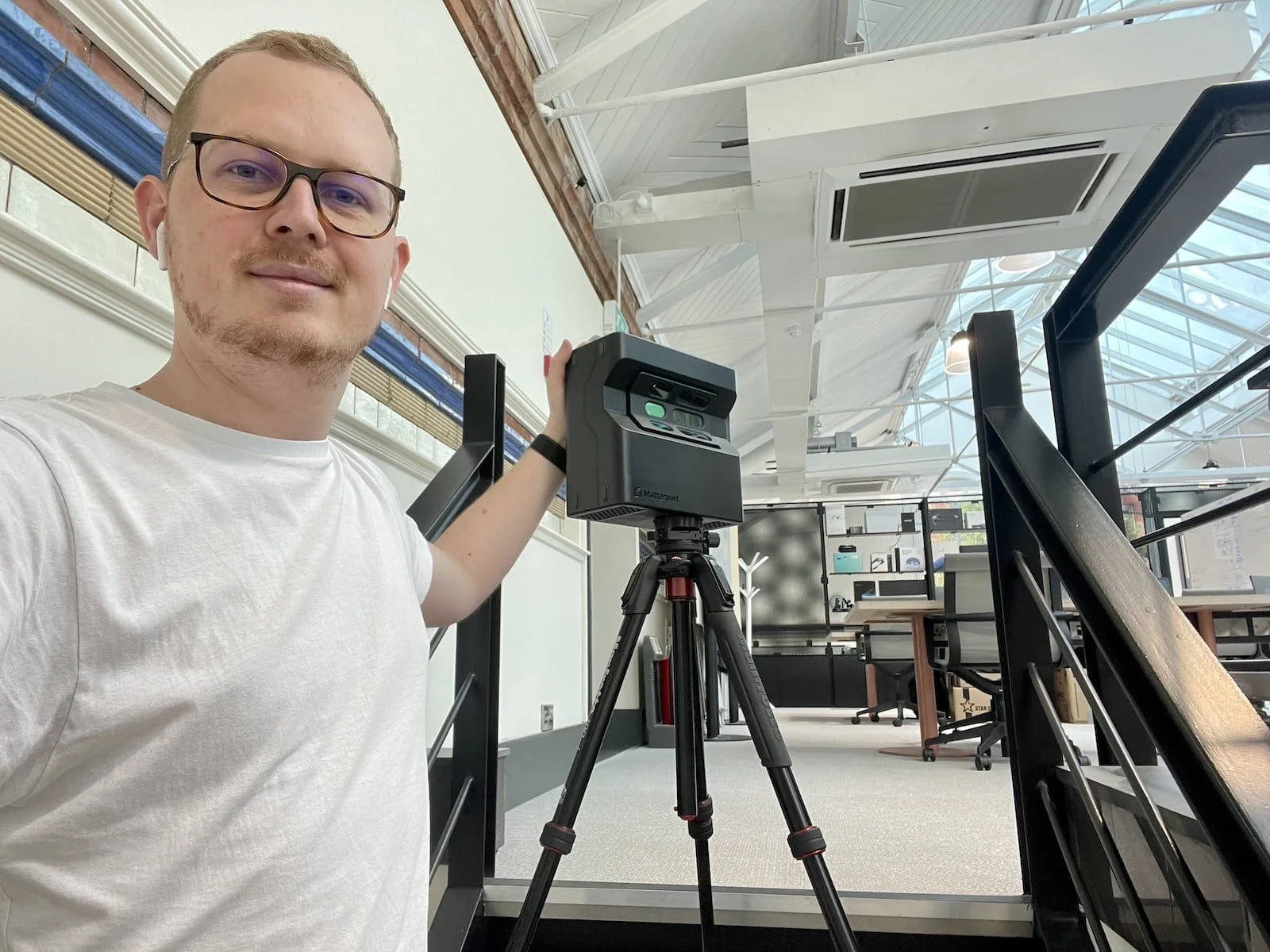
Capture once, trust always. We use LiDAR scanning to capture buildings accurately and build clear 3D Digital Twins. From that, we deliver the essential CAD/BIM drawings and a clean asset register—so every luminaire, driver and emergency pack is recorded in the right room with the right notes. TM65/EPD details (where available) sit beside each asset in plain language, making choices faster and easier during design reviews and refurb cycles.
Make day-to-day FM simpler. Facilities teams don’t need to hunt through PDFs and emails. In the twin, you can pull up a space, see what’s installed, check service notes/warranty, and view simple carbon info when planning replacements. It’s a straightforward way to balance reliability, cost and carbon without getting tangled in spreadsheets.
Handovers that actually help. Each project handover includes the twin, the drawings, and tidy asset schedules—ready for operations. That consistency makes audits painless and lets you line up like-for-like upgrades across the portfolio when standards or hours change. It’s a practical, low-friction path to smarter maintenance and lower whole-life impact.
🚀 Start a Project When you’re ready, share a few details and we’ll propose scope, pricing, and timelines tailored to your site: https://digitalstrada.com/start-project/
🌟 Romania’s entry into the Schengen Area marks a historic milestone for European integration. The Nadlac border crossing, as Romania’s primary gateway to Central Europe, stands at the forefront of this transformation. Digital Strada envisions revolutionizing this crucial transit point through advanced 3D Digital Twin technology, enhancing cross-border operations and reducing the current 12-hour waiting times that cost the transportation industry billions annually.
🏗️ The removal of physical borders calls for innovative digital solutions that can bridge geographical distances and enhance business operations. Digital Twins, our specialty at Digital Strada, offer precise virtual replicas of physical assets, enabling seamless collaboration and decision-making across the Schengen Area.
Top 10 Digital Twin Applications for Romania’s Schengen Integration
🏢 Infrastructure Development
Nadlac Border Facility Management: Creating detailed 3D models of Nadlac Border Crossing for optimized traffic flow and international transit operations, enabling real-time monitoring of vehicle queues, customs processing, and infrastructure capacity to reduce waiting times
Border Crossing Facilities: Digital Twins of modernized checkpoint infrastructure for efficient traffic flow.
🏭 Industrial Applications 3. Manufacturing Plants: Virtual monitoring and management of production facilities for cross-border industrial collaboration 4. Warehouse Networks: Integrated 3D mapping of storage facilities across Schengen countries 5. Supply Chain Visualization: Real-time 3D tracking and optimization of goods movement
🏰 Cultural Heritage & Tourism 6. Historical Site Preservation: Detailed 3D documentation of Romanian cultural landmarks for European tourism promotion 7. Virtual Museum Tours: Interactive experiences connecting Romanian heritage with European cultural institutions
🌐 Smart City Integration 8. Urban Planning: Collaborative city development projects aligned with European standards 9. Transportation Hubs: Digital Twins of airports and railway stations for improved international connectivity 10. Emergency Response Centers: Integrated safety and security management systems across borders
Opportunity to build Digital Bridges 🚀
💫 The integration of Romania into the Schengen Area represents more than the removal of physical borders – it’s an opportunity to build digital bridges that transcend traditional boundaries. Through Digital Strada’s expertise in 3D Digital Twins, we’re ready to contribute to Romania’s digital transformation and strengthen its connections within the European digital ecosystem.
Advancing Digital Twin Technology 🔮
Digital Strada’s expertise in creating immersive, 4K-resolution, photo-realistic 3D digital twins for hotels, restaurants, venues, and various other building types aligns perfectly with the region’s focus on digital innovation. 🏨
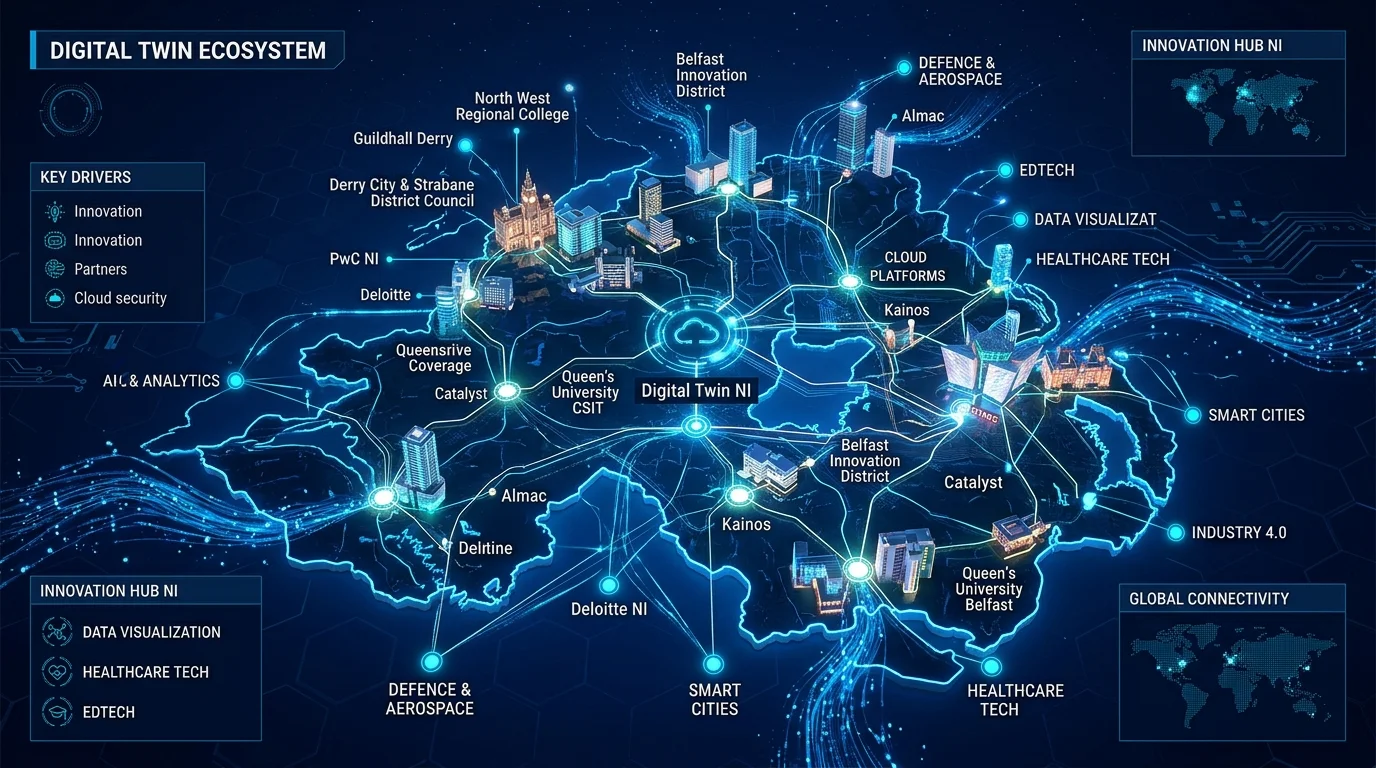
Our technology has the potential to contribute significantly to the UK Digital Twin Centre recently announced for Belfast, which aims to revolutionize how industries develop products, services, and systems across the UK.
🤝 As we embrace this new chapter, Digital Strada stands ready to partner with Romanian organizations, helping them leverage cutting-edge 3D technology to thrive in the borderless European market. Together, we’re not just crossing borders; we’re eliminating them in the digital realm.
Growth and Innovation through Immersive Software 📊
🚀 As we embark on this journey, I’m filled with enthusiasm for the future of Northern Ireland’s software industry. At Digital Strada, we’re at the forefront of 3D Digital Twins technology, and I believe our perspective will be valuable in shaping the sector’s future.
🎉 Help your customers to Experience Immersive Communication with a Digital Twin for your hotel, resort, restaurant, museum, factory, real estate project or space.
☎️ Leave a comment with your business and let’s connect to deliver a 3D Digital Twin Solution for your Facility Managemnt Team.
We are thrilled to announce that Digital Strada has officially become a member of Software NI, the leading trade body representing the software industry in Northern Ireland with the Founder of Digital Strada becoming an individual member of Software NI 🎉.
This strategic move aligns perfectly with our mission to deliver cutting-edge 3D Digital Twin solutions and immersive experiences for businesses across various sectors. 💼
As a Belfast-based company specializing in 3D Digital Twins, we are excited to be part of Software NI’s ambitious ‘50 and Five by 35‘ strategy. 📈
This initiative aims to grow the local software sector to 50,000 jobs and £5 billion in gross value added (GVA) by 2035. By joining Software NI, we are positioning ourselves at the forefront of Northern Ireland’s burgeoning tech landscape. 🌱
Leveraging Opportunities for Growth 🚀
Our membership in Software NI opens up new avenues for collaboration and growth. We look forward to:
Participating in industry-focused forums and events 🗣️
Accessing valuable resources and support for scaling our business 📚
Contributing to the development of software workforce programmes 👥
Exploring potential partnerships with other innovative companies in the region 🤝
Advancing Digital Twin Technology 🔮
Digital Strada’s expertise in creating immersive, 4K-resolution, photo-realistic 3D digital twins for hotels, restaurants, venues, and various other building types aligns perfectly with the region’s focus on digital innovation. 🏨
Our technology has the potential to contribute significantly to the UK Digital Twin Centre recently announced for Belfast, which aims to revolutionize how industries develop products, services, and systems across the UK.
Commitment to Northern Ireland’s Tech Ecosystem 🌿
As a member of Software NI, we are committed to playing our part in establishing Northern Ireland as a global centre of software excellence. 🌍
We believe our specialized focus on 3D Digital Twins, virtual tours, and immersive experiences will contribute to the diverse and innovative software landscape that Software NI is fostering. 🕶️
About Software NI 🔭
Software NI was established in 2022 by a group of independent companies as the representative body for software engineering companies in Northern Ireland.
Founding member companies have underwritten the organisation for its first three years of operation as it works towards an independent, fully sustainable industry funded model. The founding member companies are:
As a not-for-profit organisation, we exist to champion the NI software sector which contributes £1.7 billion annually and employs 23,000 people across approximately 2,200 businesses. We work with key decision makers to create the best conditions for people and companies in the sector. This includes the areas of Education, Skills, Sales and the future of the sector itself.
Vision
Our50 and 5 by 35vision is to double the Software job footprint in NI to 50,000 jobs by 2035, at which point we estimate the software industry will contribute around £5 billion in Gross Value Added to our local economy.
Mission Statement:
“We are the voice of the software industry in Northern Ireland. We exist to lobby and support strategy and policy development to ensure that Northern Ireland becomes the world leading region for innovative software businesses leading to a sustainable and prosperous economic future.”
Looking Ahead 🔭
We are excited about the opportunities that lie ahead as we integrate into the Software NI community. 🌠
Our team is eager to collaborate with fellow members, share our expertise, and contribute to the growth of Northern Ireland’s software sector. 🤓
By joining forces with Software NI, Digital Strada is not just expanding its network; we are actively participating in shaping the future of technology in Northern Ireland. 🔮
We look forward to this new chapter and the innovative solutions we will create together. 💡
🎉 Help your customers to Experience Immersive Communication with a Digital Twin for your hotel, resort, restaurant, museum, factory, real estate project or space.
☎️ Leave a comment with your business and let’s connect to deliver a 3D Digital Twin Solution for your Facility Managemnt Team.