Bridging Epochs: An Evening Walk Through Timisoara and the Future of 3D Digital Twins

Bridging Epochs: An Evening Walk Through Timisoara and the Future of 3D Digital Twins

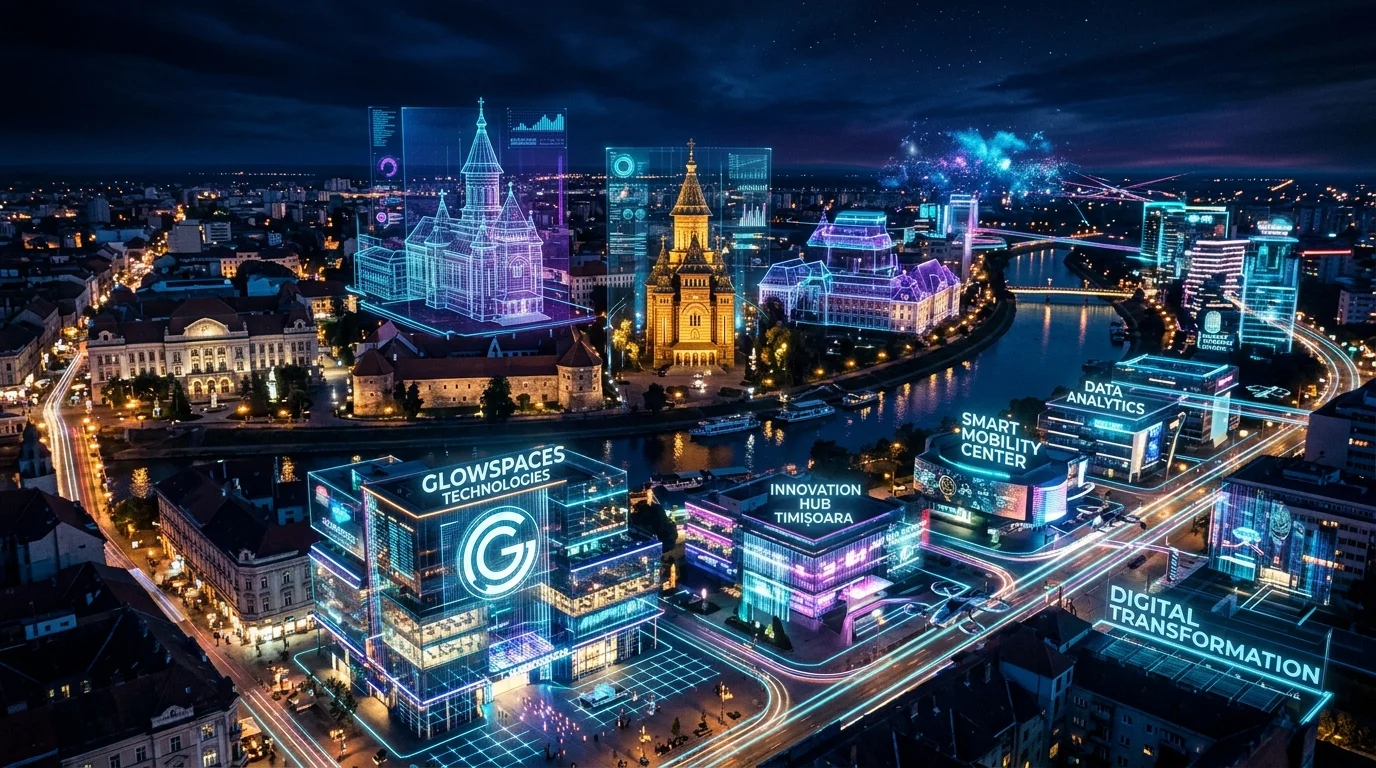
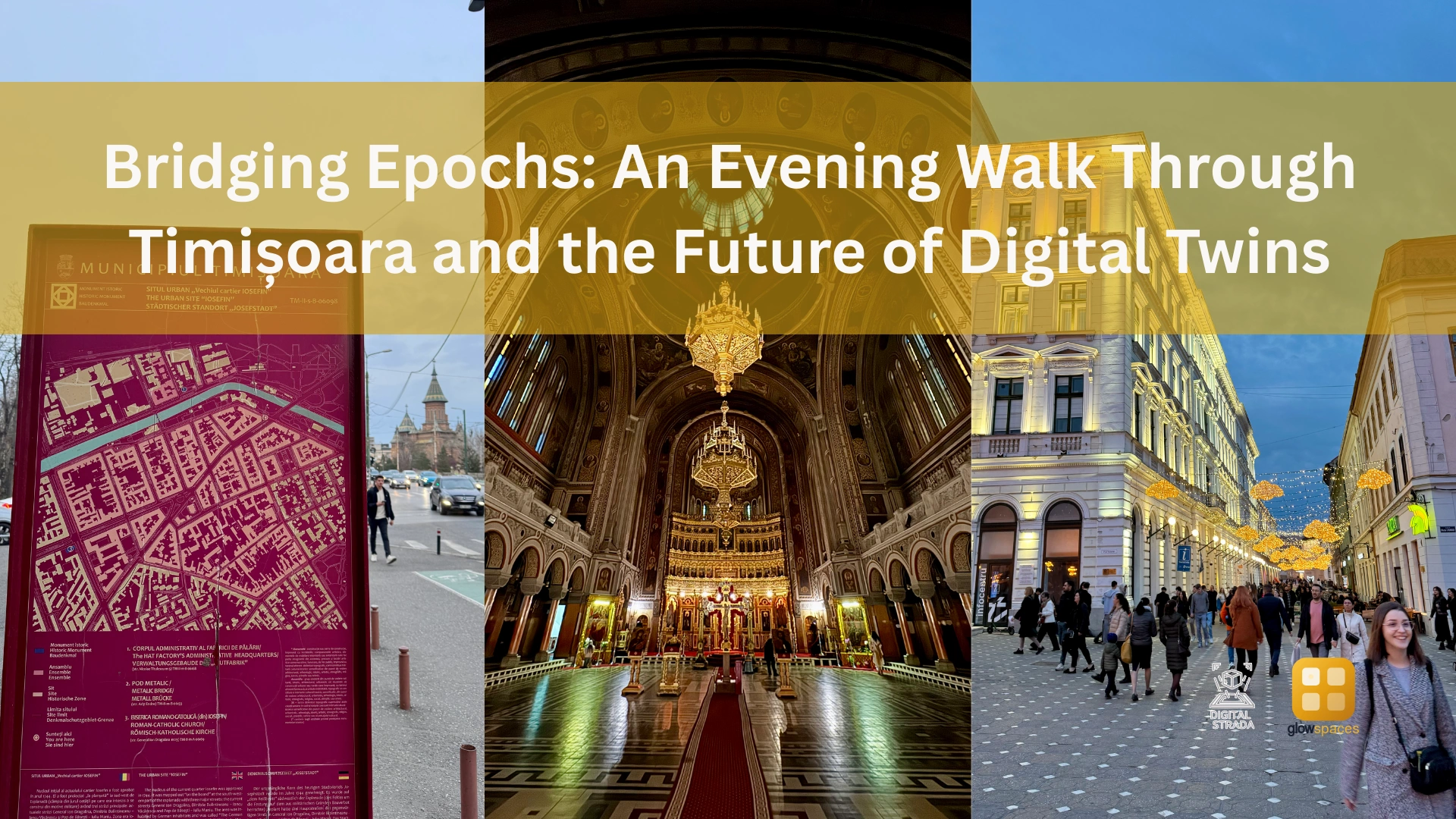
🏛️ The physical architecture of a metropolis functions as a silent, immutable chronicle of its historical evolution, and nowhere within Eastern Europe is this architectural dialogue more profoundly articulated than in the city of Timișoara. Defined by an unparalleled density of built heritage, the urban center holds the largest ensemble of buildings classified as historical monuments in Romania. On the evening of March 17, 2026, just hours before the inaugural “Immersive Heritage 2026” conference at the Politehnica University of Timișoara (UPT), I took a quiet walk through the city’s historic core. As dusk settled over Piața Victoriei and the Bega River canal, I captured the intricate Baroque and Secessionist facades with my camera. These casual evening photos serve as a powerful reminder of what we are fighting to preserve, and they perfectly frame the conversations we will be having over the next three days at the conference.

📸 Traditional methodologies of architectural documentation, historically reliant on two-dimensional blueprints and standard optical photography, consistently fail when confronted with the hyper-complex geometries of structures such as the illuminated Opera House or the monumental Metropolitan Orthodox Cathedral I admired last night. The visual beauty of these structures explicitly underscores the technological imperative for millimeter-accurate 3D Reality Capture. By envisioning the deployment of advanced Terrestrial Laser Scanning (TLS) networks fused with high-density LiDAR, the digital documentation process evolves beyond mere aesthetic visualization. At Digital Strada, we are actively constructing the “Golden Thread” of spatial data—an unalterable, mathematically precise digital shadow of the physical asset that guarantees structural integrity over time.

💻 This meticulous reality capture vision culminates in the generation of Heritage Building Information Models (HBIM), which now serve as the indispensable bedrock for all modern restoration and conservation efforts. By generating highly accurate point clouds, preservationists, structural engineers, and municipal architects are provided with a singular, incontrovertible source of truth. This technological paradigm shift entirely eliminates the costly guesswork inherent in the adaptive reuse of historic structures. It facilitates non-destructive structural analysis, enables advanced clash detection before physical construction begins, and allows for the seamless, invisible integration of modern technological amenities within highly protected historic shells.

🏢 However, the preservation of cultural heritage cannot exist in a financial vacuum; it demands sustainable, data-driven economic models to attract institutional capital. It is precisely at this intersection that the profound synergy between Digital Strada’s rigorous spatial capture and the GlowSpaces AI platform becomes evident. While Digital Strada architects the high-fidelity digital twin, the GlowSpaces intelligence engine ingests this raw spatial data to execute institutional-grade financial modeling. For real estate developers and urban planners seeking to revitalize Timișoara’s derelict palaces or industrial warehouses, GlowSpaces provides unparalleled predictive valuation and Capital Expenditure (CapEx) intelligence.

💡 By instantaneously cross-referencing proposed 3D layout alterations with real-time local contractor rates, wholesale material pricing, and strict regional heritage permit requirements, the platform generates precise, line-item renovation cost analyses. This transformative capability shifts a historic building from being viewed as a high-risk preservation liability into a verified, risk-mitigated financial asset, complete with a clearly defined spatial Return on Investment (ROI).

🚀 The timing of this evening walk was the perfect mental primer for the “Immersive Heritage” conference at UPT. The symposium focuses intently on how immersive technologies—spanning XR, AR, and VR—can radically transform historical sites into cutting-edge educational and research environments. Digital Strada’s documented successes in the region, including the precise digital twin and ClassVR integration for the “Sf. Ilie” Church, serve as practical, scalable blueprints for community engagement. Through the application of 3D Digital Twins, HBIM, and AI-driven PropTech, we are not merely preserving the past we admire on an evening stroll; we are actively architecting the digital infrastructure required to sustain Timișoara’s cultural and economic supremacy for the next century.

Timișoara Revoluționară: Why I am Betting on 3D Digital Twins and GlowSpaces to Build Our Global Innovation Hub

Timișoara Revoluționară: Why I am Betting on 3D Digital Twins and GlowSpaces to Build Our Global Innovation Hub

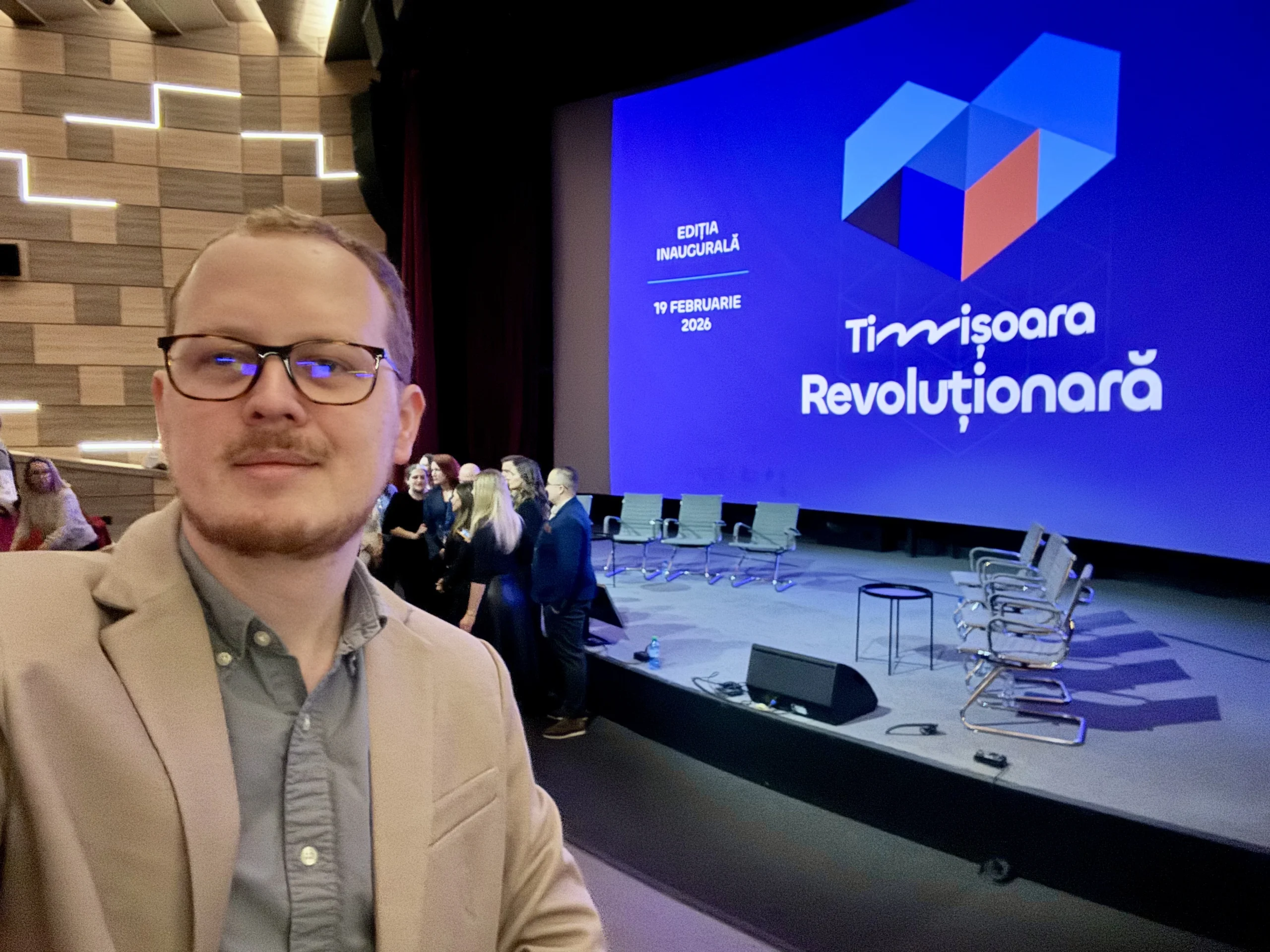
Two weeks ago, on 19th February, 2026, I joined the audience at Cinema Timiș. It was for the official launch of the project titled Timișoara Revoluționară.

I felt a profound shift in the very atmosphere of our regional business community.

For decades, we have rested on the laurels of being a city of firsts. We have often looked back at our revolutionary history to justify our current status.

I listened to the local administration and my fellow tech leaders. The message was unmistakable. Nostalgia is no longer a workable currency for a city that aims to lead the 21st century.

Today, we are not just a city that remembers a revolution. We are a city that produces one every single day. This is achieved through implementation, engineering excellence, and a relentless drive for performance.

Our local technology is now timing the Olympic Games to the hundredth of a second. It is securing global financial systems. It is also building the 4G networks that will soon power missions on the surface of the Moon.

At Digital Strada, I do not view this merely as a point of pride. I consider it a technical mandate. We are transitioning from being mere consumers of global innovation to being the architects of high-value digital infrastructure.

My vision is to guarantee this transition is anchored in a Golden Thread of 3D Digital Twins. This is a framework of implementation and precision. It will define Timișoara as a Global Innovation Hub through 2030.

Aligning with a Strategic Administration: The 1.4 Multiplier

Mayor Dominic Fritz described Timișoara as a magnet for innovation. He was not just using a catchphrase for a political campaign.

He outlined a causal chain that I believe must be the bedrock of our business community. Prosperity requires innovation.

While the administration highlights a chain of causality involving culture and respect, my professional conviction is that innovation is primarily driven by technical mastery, high-level intelligence, and engineering excellence: these are the true engines of progress.

Technical skills and sharp intelligence are not just additives: they are the primordial requirements for any Global Innovation Hub that aims to compete on the world stage.

I have seen this administration move from isolated, punctual projects. They are now focusing on long-term urban strategies. These strategies focus on quality of life and attractiveness. The efficiency of this approach is measurable and impressive.

In the last five years, our city has seen 500 million euros in investments.

By adding, on average, 1.4 RON in non-reimbursable funds for every 1 RON from the local budget, the administration has designed an environment.

This environment promotes high efficiency. This is exactly where I am positioning Digital Strada.

My 3D Digital Twin solutions are not just technical tools. They serve as the transparency layer. This is what public-private partnerships and European-funded projects need to succeed.

To be a true motor of dialogue between business and the public sector, we need a shared spatial truth. This will remove the friction of misaligned data. It will also reduce the high costs of spatial uncertainty.

Beyond Reality Capture: My Vision for Living Buildings

The revolution does not end when the reality capture of a site is finished. In fact, that is only the beginning of the building’s digital life.

Through Digital Strada, I am moving beyond simple 360-degree tours to deliver what I call an Advanced Facility Operating System.

My Facility Management solutions turn a static 3D model into an active management hub.

I integrate IoT control, asset management, and maintenance scheduling via our STAGES platform. This provides facility managers with a searchable digital audit trail.

This is the Golden Thread. It replaces dusty paper binders with real-time operational reality.

This ensures that safety and efficiency are maintained for the entire lifecycle of the asset.

Furthermore, I am deeply committed to our architectural past through our Immersive Heritage Solutions.

I treat the digital twin as an information container.

It is often referred to as HBIM.

This links historical archives and high-density LiDAR data to protect our cultural landmarks.

Whether it is a 1930s Art Deco villa or a large-scale fortress, I guarantee our history is preserved. It becomes a searchable digital asset.

This allows users to effectively teleport into our heritage using VR and AR.

This technology creates a bridge between our revolutionary past and our technological future.

We are not just recording history: we are making it accessible and resilient against the passage of time.

Incubating the Future of PropTech: GlowSpaces

Digital Strada is implementing the digital twin of the as-is environment.

My newest venture, GlowSpaces, aims to solve the systemic disconnect between physical spaces and their investment potential.

This startup is the culmination of years spent understanding the friction points in Real Estate and AEC.

We have identified that the biggest hurdle for large-scale investment is the lack of institutional-grade visualization and financial modeling.

GlowSpaces is an AI-powered platform designed specifically for the Real Estate and AEC industries.

It transforms raw spatial data into verified financial models, synthesizing predictive valuation and luxury staging.

It empowers investors to visualize ROI before a single brick is moved.

This effectively merges the accuracy of engineering with the persuasion of high-end design.

This is the implementation of AI the market has been waiting for. It reveals hidden capital. It deploys it with absolute precision.

I invite you to explore the future of PropTech and join our community at http://glowspaces.co.uk to see how we are redefining investment transparency.

The Startup Reality Check: From Grants to Implementation

We must be honest about our startup ecosystem. For years, our region was shaped by a grant mindset. This mindset often lacked rigorous performance metrics.

The launch of Vest Ventures, the 16.6 million euro regional venture capital fund, is the maturity signal we have been waiting for. We are finally moving toward an equity mindset where scaling, implementation, and product-market validation are the only metrics that matter.

I embrace this shift at Digital Strada by delivering high-density 3D precision as our default standard.

In the AEC sector, data that is just good enough leads to expensive rework and wasted capital. I offer high-density E57 point clouds. These act as the digital baseline. This allows both startups and industrial giants to build with absolute certainty.

We are replacing the old adage of measure twice, cut once with a new standard: model once, build confidently. This is how we confirm that Timișoara becomes a Global Innovation Hub that actually delivers on its promises.

Conclusion: Leading the Transition to 2030

The next five years will be defined by how we integrate Artificial Intelligence. We will also incorporate the Industrial Internet of Things and high-fidelity 3D Digital Twins into our everyday workflows.

I am building the digital infrastructure that will define Timișoara’s next decade. Our city is prepared to become a Global Innovation Hub.

We need to have the courage and build it on a foundation of reality capture. Rigorous implementation is also essential.

The future is indeed here in Timișoara. It belongs to those of us who build it on data and implementation, not just on promises. I am ready to lead this transition. Let’s build the future together.

Keep in Touch & Connect

I am seeking to connect with visionary leaders in Real Estate development. These leaders appreciate heritage preservation and industrial reconstruction. They demand precision and transparency.

If you are looking for a single source of truth for your next project, let’s talk.

Connect with me on LinkedIn: Emil Indricău 🤝

Explore our AEC Solutions: digitalstrada.com/aec 🚀

Join the GlowSpaces Revolution: glowspaces.co.uk 💡

Timișoara Revoluționară (@timisoara.revolutionara) – Instagram
144 Followers, 8 Following, 14 Posts – Timișoara Revoluționară (@timisoara.revolutionara) on Instagram: “Platforma Municipiului Timișoara prin Visit …

Primăria a lansat proiectul ‘Timișoara Revoluționară’ – orașul care …
20 Feb 2026 Foto: Primăria Municipiului Timişoara. A- A A+. Primăria Timișoara a lansat oficial, joi seara, proiectul ‘Timișoara Revoluționară‘, o …

BIM Heroes & Digital Strada: Turning Real Buildings into Better Information

BIM Heroes & Digital Strada: Turning Real Buildings into Better Information

Join us on the “BIM Heroes” community discussion platform. It’s a place to connect, engage, network, share, teach, learn and grow with other AEC professionals interested in digital transition and the adoption of BIM.

Be part of a global movement to provide better building and infrastructure support, through Better Information Management, positively impacting productivity, outcome, safety, and sustainability in the planning, design, construction, and management of the built environment.

Emil Indricau

Join us on the “BIM Heroes” https://www.bimhero.io/share/8ZApiHmQ6zJ9A8Yr?utm_source=manual


1. How BIM Heroes Came Together

BIM Heroes started as a simple idea: a place where BIM and digital-delivery professionals could talk honestly about what works and what fails on real projects. Instead of polished conference slides, people brought coordination clashes, messy models, and CDE frustrations into open conversation. Over time, that honesty attracted architects, engineers, contractors, 3D scanning providers, and software companies who all share the same goal: make information more reliable across the lifecycle of a building. Today, BIM Heroes is a living community built on real practice, not theory.


2. A Meeting Point for BIM, ConTech, and 3D Businesses

Inside BIM Heroes, you’ll find BIM coordinators discussing clash-detection workflows alongside reality-capture specialists debating scan specifications. Architecture and construction technology teams share how they structure models so site teams can actually build from them, not just admire them. 3D software and service providers contribute tools and methods that connect point clouds, BIM models, and facility data in ways clients can understand. The result is a space where technical decisions are always tied back to programme, cost, risk, and usability.


3. Why I Joined BIM Heroes

I joined BIM Heroes because my work at Digital Strada lives exactly where BIM, reality capture, and digital twins intersect. I wanted a place to stay close to the people who coordinate models, manage information requirements, and run design reviews every week. As a member, I share my own experience from the field and, just as importantly, listen to how other AEC professionals are using scan-to-BIM, floor plans, CAD, and spatial data. That feedback loop helps me keep Digital Strada’s services sharp, relevant, and grounded in real project constraints.


4. Digital Strada’s Role in the BIM Ecosystem

Through Digital Strada, I provide reality-based deliverables that plug straight into BIM workflows: floor plans, CAD drawings, BIM-ready models, and spatial data sourced from real buildings. I’ve worked on hotels, hospitality venues, offices, and commercial spaces where accurate measurements and clear visuals are critical for design and operations. Every project reinforces a simple principle: if the underlying data is wrong or incomplete, all the BIM discussions on top of it are just noise. That is the mindset I bring into BIM Heroes when we talk about information quality and model trust.


5. Scan-to-BIM: From Site Visit to Usable Models

One of my core offerings is Matterport-based scan-to-BIM, which turns a single, structured capture into floor plans, CAD outputs, and BIM deliverables. This approach cuts down on repeated site visits, reduces disruption for building users, and provides a measurable digital record of the existing conditions. The service is documented in more detail here: https://digitalstrada.com/products/matterport-scan-to-bim/. In the BIM Heroes community, I often draw on this workflow when we discuss realistic levels of detail, accuracy expectations, and how to align scans with BIM execution plans.


6. Immersive Experiences Backed by Spatial Data

Digital Strada also creates immersive experiences that let teams and clients walk through a space virtually while still relying on accurate underlying geometry. These experiences support design reviews, stakeholder engagement, and decision-making when getting everyone physically on site is impractical or impossible. Because they are built on measured spatial data, they work alongside BIM models instead of competing with them. This combination of visual clarity and trustworthy measurement is a frequent topic in BIM Heroes, especially when people look for better ways to explain risk and intent to non-technical stakeholders.


7. From BIM to Operation: Advanced Facility Management System

For building owners and operators, I extend digital information beyond handover using Digital Strada’s Advanced Facility Management System for the AEC sector. The solution, described at https://digitalstrada.com/aec-architecture-engineering-and-construction-industry/, connects 3D digital twins with asset information, tasks, and documentation so facilities teams can find issues in context, not just in spreadsheets. This turns BIM and spatial data into something facilities managers can actually use in their daily work. In BIM Heroes, that lifecycle perspective is central: information should not die at practical completion.


8. How I Contribute Inside BIM Heroes

Inside the community, I join conversations on scan-to-BIM feasibility, the practicalities of point-cloud delivery, and how to structure spatial data so it supports both design and operations. I share insights from Digital Strada projects: where scope definitions worked, where they failed, and how we corrected course. I also learn from other members who work in different markets and on different scales of project. That mix of giving and learning is exactly why BIM Heroes works as a professional community rather than just another social feed.


9. Collaborating on Projects: Where We Can Work Together

If you are planning a refurbishment, fit-out, change of use, or asset information refresh, there is a natural way for us to collaborate through BIM Heroes. You bring your domain expertise in architecture, engineering, construction, or facilities management; I bring reality capture, floor plans, CAD, BIM-ready models, spatial data, and immersive experiences. Together, we can design a practical information workflow that respects your team’s capacity and tools. The aim is simple: better information that supports better decisions, rather than more data that nobody uses.


10. Join BIM Heroes Using My Invitation Link

If this aligns with how you see BIM, digital transition, and real-world project delivery, I invite you to join the BIM Heroes community using my personal link:
https://www.bimhero.io/share/8ZApiHmQ6zJ9A8Yr?utm_source=manual

Once you are inside, connect with me, introduce your role, and share the challenges you are facing around floor plans, CAD, BIM, spatial data, or immersive experiences. From there, we can explore concrete ways that Digital Strada’s services and the BIM Heroes network can support your projects, your clients, and your teams.

Digital Strada STAGES – Spot the Difference for Construction Industry

Digital Strada STAGES – Spot the Difference for Construction Industry

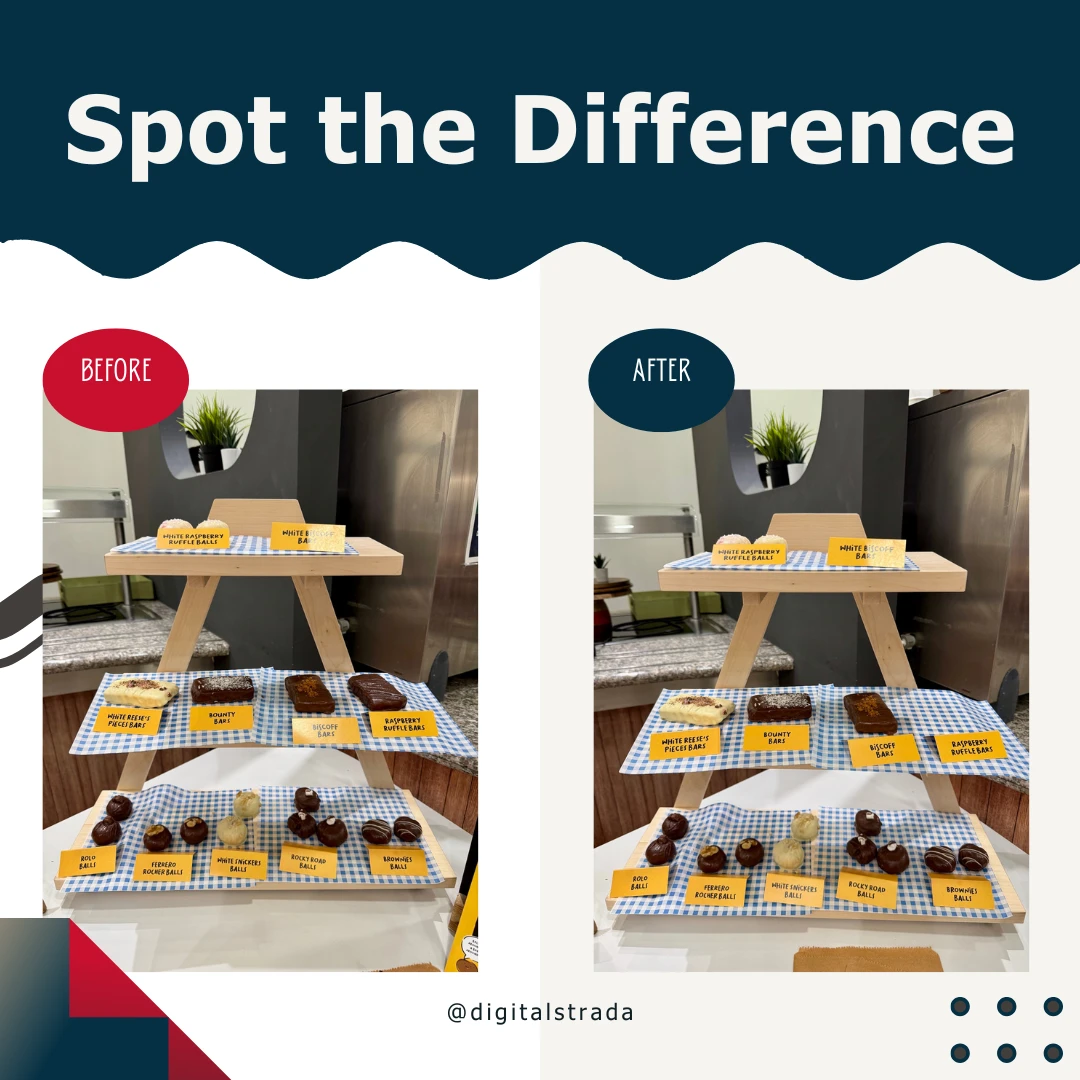
🍫 Confession time: in today’s “spot the difference,” the second image is missing… a chocolate bar. Guilty!

😅 Fun aside — it’s a perfect metaphor for construction: if a chunk “disappears” between plan and site, can you spot it fast enough to fix it?

🏗️ I’m Emil, Founder at Digital Strada for 3D Digital Twins. That’s why we are offering STAGES, our Smart Building Solutions component powered by 3D Digital Twins for the AEC world. Think of it as a living project record that makes progress (and gaps) impossible to hide — from the first sketch to operations.

🧭 Pre-construction: STAGES anchors designs, scopes, and decisions to a single 3D truth. Baselines are versioned, RFIs and approvals are context-aware, and stakeholders see exactly what changed, when, and why — no more “which drawing is final?” debates.

🚧 Active build: Site reality is continuously compared to plan inside the twin. You get real-time visibility of work completed vs. scheduled, clash and snag tracking in model context, and clear “who/when” ownership — so deviations are spotted as quickly as that missing chocolate square.

🛠️ Post-construction & maintenance: STAGES turns handover into a structured, searchable asset. O&M docs, asset registers, warranties, and maintenance tasks live inside the twin, giving FM teams a reliable source of truth for the building’s entire lifecycle — not a dusty binder.

📈 Bottom line: better evidence, faster decisions, cleaner audits, and a calmer project room. If you’d like a walkthrough on an active scheme (or just want to see the chocolate demo), drop me a note.

Start AEC Transformation👷‍♂️ Digital Strada STAGES

cc 🏦 Ulster Bank and NatWest Group NatWest NatWest International Business Accelerator.

#DigitalTwins #ConstructionTech #AEC #SmartBuildings #BIM #ProjectControls #FacilityManagement #ProgressTracking #DigitalStrada #DigitalTransformation #SpotTheDifference

TM65: Embodied Carbon in Building Services — CPD Recap with a Digital Twin Lens

TM65: Embodied Carbon in Building Services — CPD Recap with a Digital Twin Lens

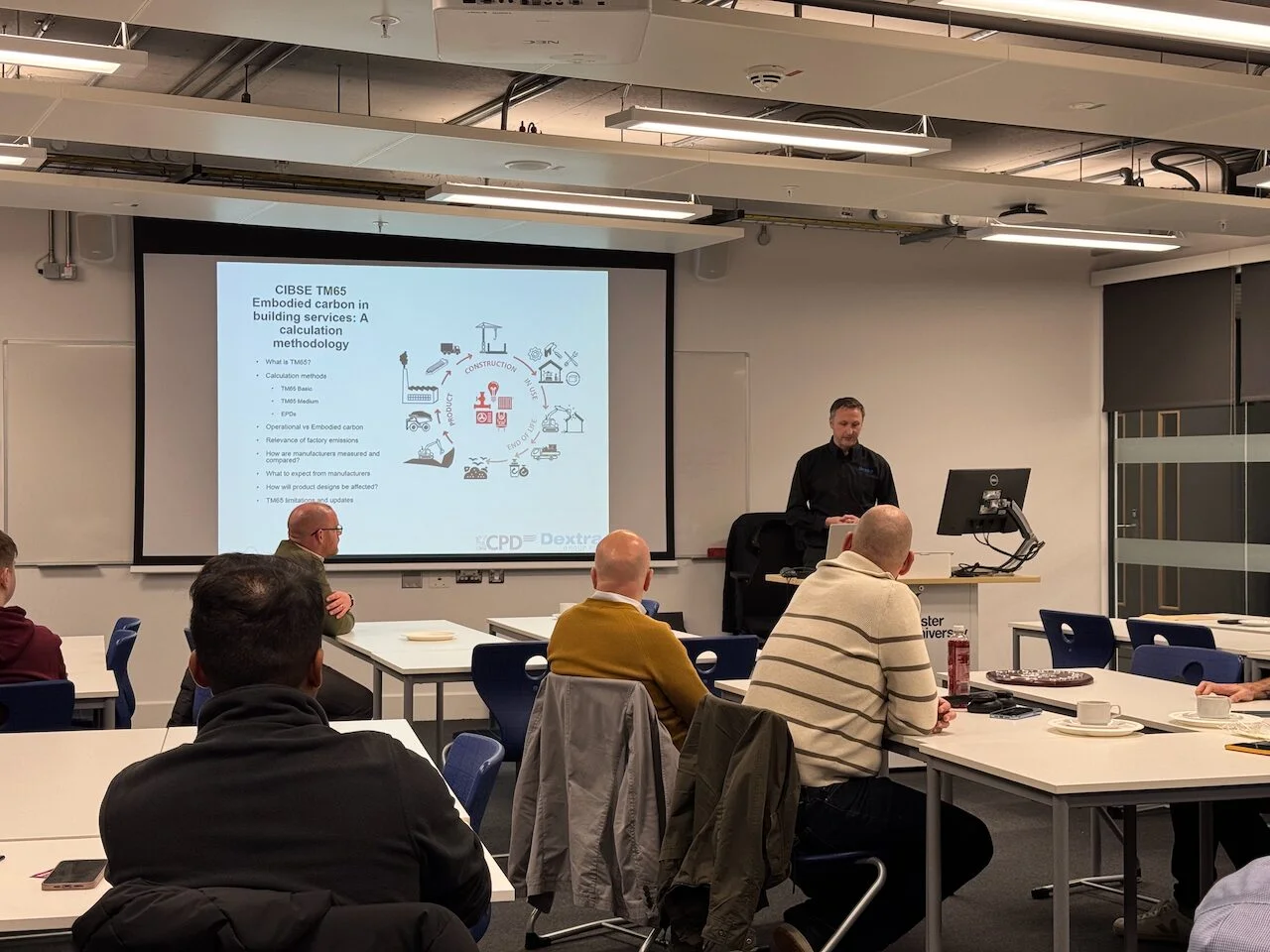
Event: TM65 – Embodied Carbon Calculation in Building Services & Student Prize Giving
Date & Time: Tuesday, 25 February 2025 · 17:30–20:00 GMT
Venue: Ulster University, Belfast BT15 1ED
Context: CIBSE-aligned CPD delivered with Dextra Group PLC, focused on lighting, pragmatic calculations, and what this means for real projects in NI, UK, Ireland and EU.

1) Setting the scene

A full room, plenty of questions, and a topic that finally has teeth. TM65 is about estimating embodied carbon when full EPDs aren’t on the table—and then using that estimate responsibly. For us, it’s the kind of data you want sitting beside assets in a 3D Digital Twin, so decisions aren’t made from gut feel but from something concrete.

2) TM65 in plain English

TM65 focuses mostly on A1–A3 (materials + manufacturing). It’s not a full LCA, and it’s not an EPD—but it standardises how we estimate carbon so we can compare products earlier and push manufacturers toward better disclosure.

3) Route #1 — TM65 Basic

Basic uses total weight and broad material splits with standard factors plus a couple of multipliers. It’s quick and good for early design. The trade-off: uncertainty—especially around electronics.

4) Route #2 — TM65 Medium

Medium swaps the “complexity” multiplier for simple, specific entries: transport to factory, manufacturing energy, transport to site, waste processing/disposal. It’s the sweet spot for tenders when you can get a short BOM from suppliers.

5) Route #3 — EPDs

EPDs (EN 15804) are independent, cover more impacts, and spell out exactly which modules are in scope. When you have an EPD, use it. When you don’t, TM65 is your lifeline—just keep the boundaries straight.

6) Why operational often dwarfs embodied (and when it doesn’t)

TM65 excludes operational electricity. That’s not a flaw; it’s a boundary. But you need to keep it in mind:

  • Example A (operational dominates): a 1500 mm batten at ~52.9 W, running 24/7 for 10 years on a typical UK grid ends up around 960 kgCO₂e in use vs ~55 kgCO₂e embodied—roughly 19× higher.
  • Example B (embodied can dominate): a 600×600 modular panel with integral emergency gear, 21.6 W, used ~2,080 h/yr for 10 years can show embodied (~118 kg) overtaking operational (~93 kg).

7) How to compare manufacturers fairly

To avoid apples-to-oranges:

  • Match function: lumen output, CCT/CRI, optics, lifetime.
  • Match boundaries: TM65 Basic/Medium vs EPD; list the modules.
  • Ask for electronics mass (drivers/boards) and materials (alloys, polymers, finishes).
  • Check serviceability: replaceable drivers/boards beat sealed units for life extension.
  • Expect an uncertainty band on TM65 estimates.

8) What to expect from manufacturers

As TM65 adoption grows, brands will publish Medium-level certificates per SKU and be challenged to improve them over time. That’s the direction of travel.

9) How product design will change

Expect more design-for-disassembly, higher recycled aluminium, simpler polymers, and a push to right-size luminaires so you need fewer of them. Also: be thoughtful with integral emergency—it adds mass, so use where it truly helps.

10) The honest limits

TM65 is a helpful estimate, not a whole-life answer. Electronics can be under-represented in Basic; comparisons go sideways if scopes don’t match; and, unless verified (like an EPD), data is self-declared. Note it, use it, and keep the context visible.

11) Five simple moves to cut whole-life carbon

  1. Meet the standard, don’t overshoot illuminance.
  2. Cut hours with daylight and presence controls, plus practical schedules.
  3. Choose serviceable luminaires with replaceable drivers/boards and a spares plan.
  4. Prefer recycled/mono-materials, minimal coatings.
  5. Ask early for data: EPDs where possible; otherwise TM65 Medium with assumptions noted.

12) Student Prize Giving

The best part of the evening? Seeing students celebrated for exactly the kind of thinking the industry needs—repairability, sensible materials, clear reporting. The future looks capable.

13) Where this meets Digital Strada’s 3D Digital Twins & Facility Management Assets

Capture once, trust always. We use LiDAR scanning to capture buildings accurately and build clear 3D Digital Twins. From that, we deliver the essential CAD/BIM drawings and a clean asset register—so every luminaire, driver and emergency pack is recorded in the right room with the right notes. TM65/EPD details (where available) sit beside each asset in plain language, making choices faster and easier during design reviews and refurb cycles.

Make day-to-day FM simpler. Facilities teams don’t need to hunt through PDFs and emails. In the twin, you can pull up a space, see what’s installed, check service notes/warranty, and view simple carbon info when planning replacements. It’s a straightforward way to balance reliability, cost and carbon without getting tangled in spreadsheets.

Handovers that actually help. Each project handover includes the twin, the drawings, and tidy asset schedules—ready for operations. That consistency makes audits painless and lets you line up like-for-like upgrades across the portfolio when standards or hours change. It’s a practical, low-friction path to smarter maintenance and lower whole-life impact.

14) Ready to make this real? (CTA)

See what we already do

🚀 Start a Project
When you’re ready, share a few details and we’ll propose scope, pricing, and timelines tailored to your site:
https://digitalstrada.com/start-project/

💬 Prefer a quick chat first? You can also book time here:
https://digitalstrada.com/meetings/

Pin It on Pinterest