Inside the modern, vibrant community and event space of Zbor Hub Timișoara, I witnessed a live session of the Friendly Fire broadcast that illuminated a profound epistemic divide between state institutional caution and entrepreneurial tech pragmatism, as artificial intelligence evolves from an assistive novelty into an autonomous professional competitor. Rather than an academic symposium, the evening unfolded as an unvarnished examination of whether defensive hesitation protects critical thinking or risks permanently stranding youth in economic obsolescence.

1. Event Setting and Atmospheric Overview
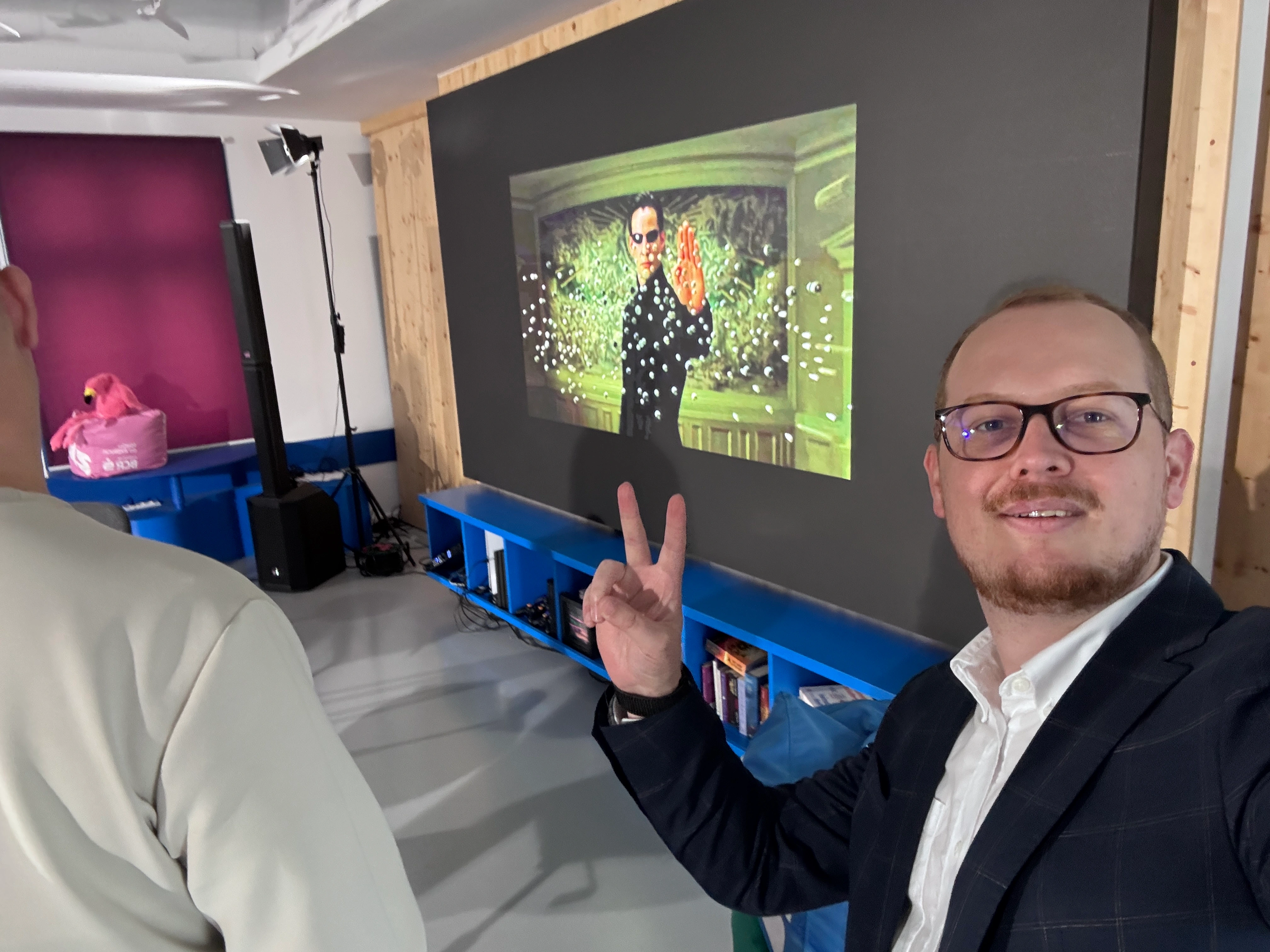
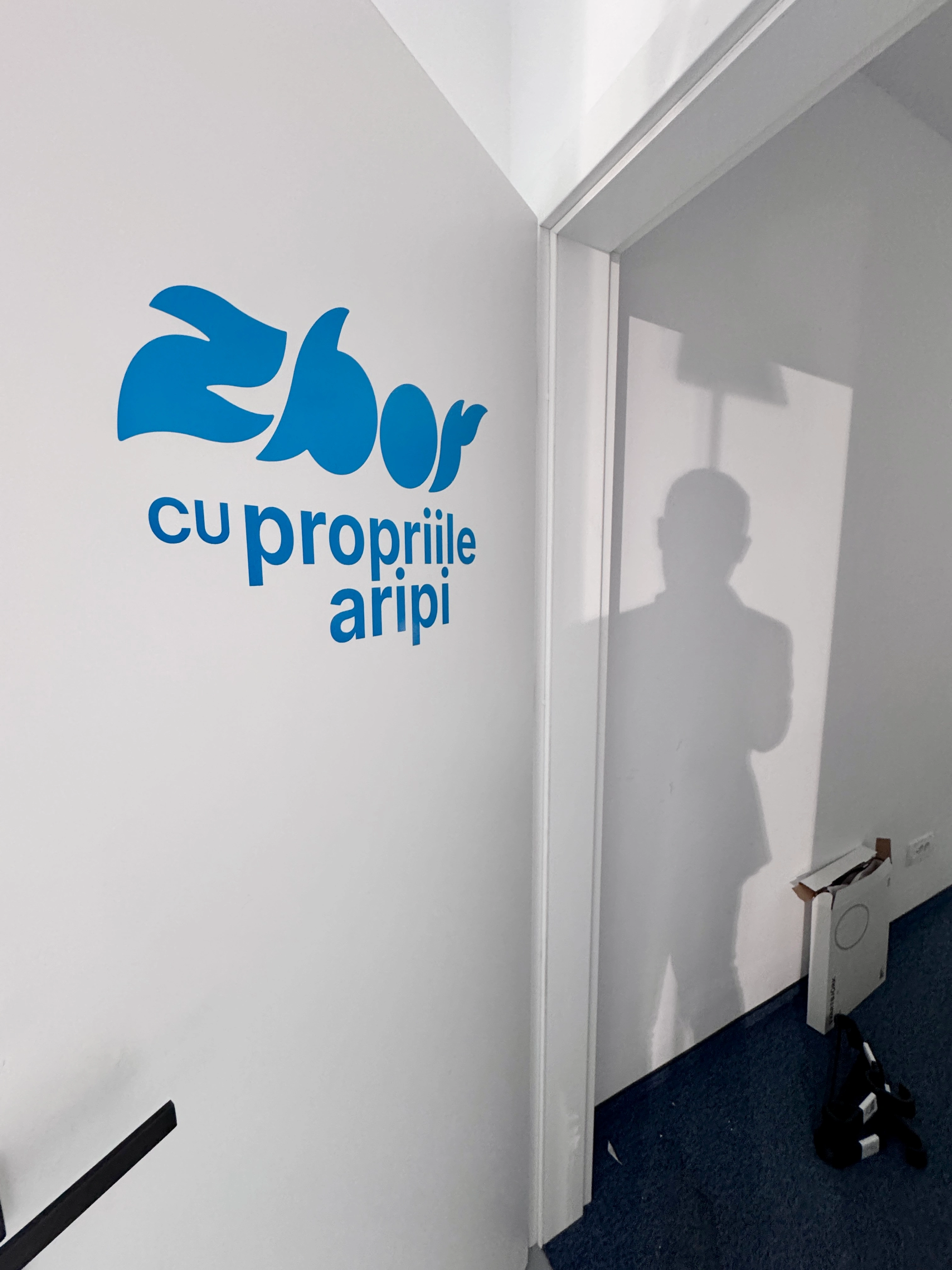
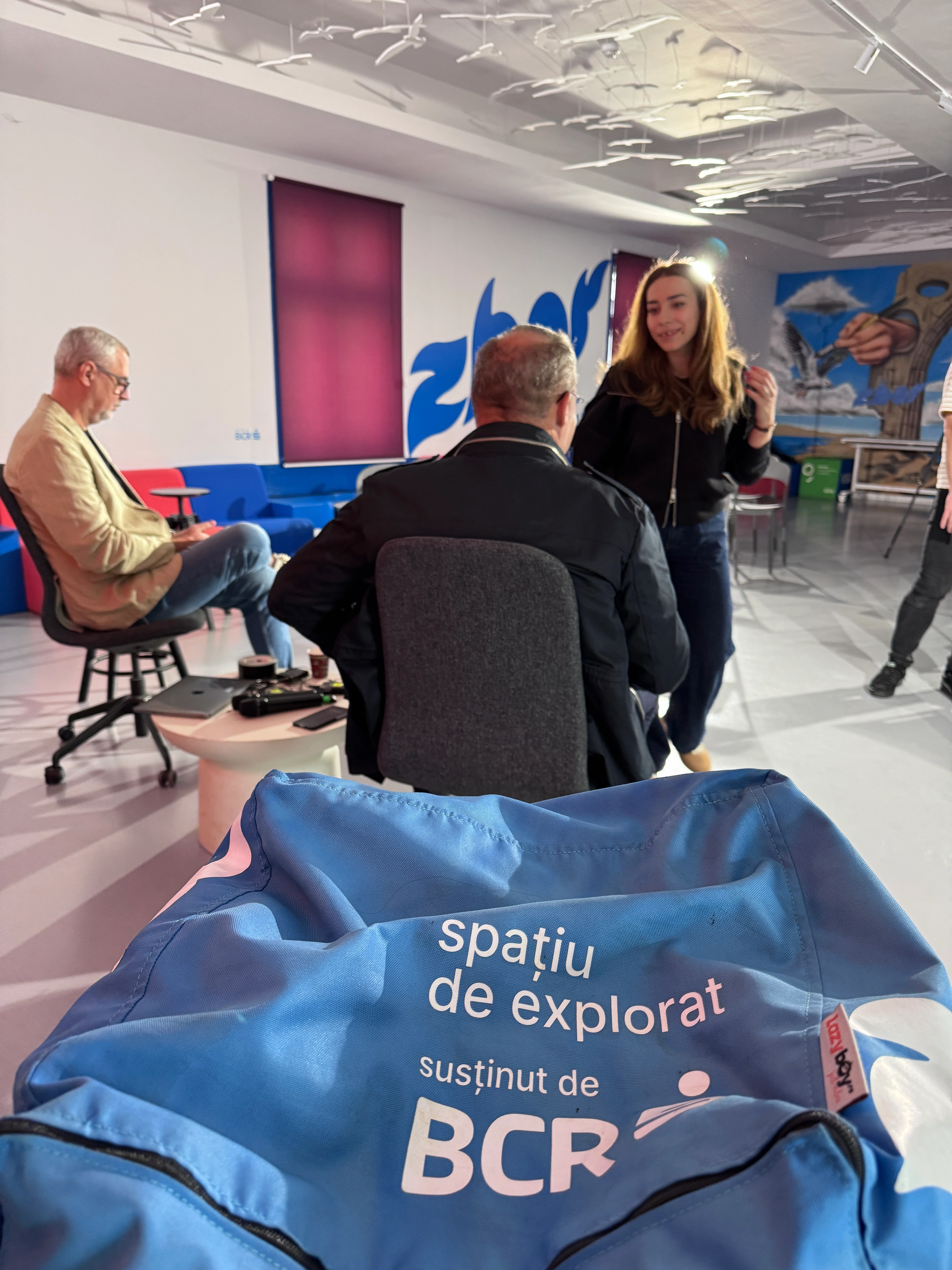
Marking its first anniversary as a youth exploration center backed by Banca Comercială Română, Zbor Hub Timișoara provided an open, welcoming community space along Strada Vasile Alecsandri. The modern venue brought together high school pupils, university researchers, early-stage developers, and young corporate professionals, gathered comfortably across the venue.
The warm atmosphere of the hub was rooted in an empathetic approach toward emerging generations, built on the core conviction that the choices, behaviors, and reactions of young people stem from valid, direct life experiences navigating an accelerating and complex world. The space was designed to offer an authentic platform for open dialogue where youth perspectives could be explored without institutional prejudice or rigid hierarchies.
As the founder of Digital Strada and creator of GlowSpaces AI, operating actively between the United Kingdom and Romania, I arrived with a builder perspective. I chose to stand at the edge of the community space, near the rear acoustic wall. I deliberately maintained a quiet, peripheral presence during the opening stages of the broadcast to ensure high school pupils and university attendees had priority to articulate their direct thoughts before I offered my entrepreneurial insights.
2. Uniform Debate Concept
Prior to examining algorithmic models, broadcasters Vlad Petreanu and Moise Guran initiated proceedings through a spirited debate over proposed legislative mandates requiring standardized uniforms across primary and secondary education.
Observing the audience exchange, I noted an unmistakable ideological tension between personal expression and standardized equality:
The Case Against Mandatory Conformity
Students contended that mandated clothing suppresses individuality at a decisive stage of personal development, imposes arbitrary financial burdens on households, and reinforces geographic prestige hierarchies between elite and regional institutions. Furthermore, participants observed that forced uniform standards fail to eliminate socioeconomic divides, merely deflecting status competition into designer footwear, backpacks, and personal electronics.
The Rationale for Institutional Leveling
Proponents viewed standardized attire as an indispensable equalizer that dampens visible wealth disparities between affluent and underprivileged students, discourages social ostracization, and creates dependable demand for domestic textile manufacturers through structured public procurement.
To me, this preliminary debate presaged the technological deliberation that followed: while centralized authorities attempt to manage disparity through rigid mandates, dynamic societal and economic realities continually outpace superficial regulation.
3. Sci-Fi Dystopian Tropes vs Practical AI Realities
The transition into artificial intelligence highlighted a noticeable cognitive divergence between the cultural pessimism of the hosts and the practical familiarity of the young audience. Vlad Petreanu and Moise Guran regularly invoked legacy sci-fi tropes, referencing apocalyptic visions reminiscent of HAL 9000, Terminator, or The Matrix to frame anxieties surrounding autonomous machines superseding human authority.
From my vantage point, these legacy narratives instill unnecessary panic in older generations while youth are already using real models productively. Conversely, student contributions reflected a complete detachment from existential cinema. For emerging generations, large language models are not self-aware entities out of dystopian fiction, but functional daily tools, functioning much like an advanced research calculator or contextual index. Students utilize them routinely to synthesize lengthy bibliographies, generate initial structural outlines for complex coursework, and troubleshoot algorithmic code segments.
4. Embedded Media
The complete live exchange can be reviewed via the primary broadcast stream below:
Watch the complete broadcast directly on YouTube
5. Educational Inertia vs Workplace Integration
Listening to student interventions, I saw firsthand the real-world operational friction emerging as artificial intelligence infiltrates distinct institutional domains:
Secondary Education Pressures
High school attendees described an institutional vacuum where teachers rarely provide guidance on digital workflows. In the absence of structured policies, the temptation of unexamined automated homework generation competes with the genuine desire to use algorithmic platforms as interactive private tutors.
Higher Education and Analytical Boundaries
Within university departments, institutional rules require explicit declarations of tool usage. Academic testing revealed that while automated systems assemble fluent essays, their evaluations remain generic and completely devoid of human clinical intuition.
Enterprise Efficiency and Entry-Level Compression
Across commercial enterprise settings, companies already mandate algorithmic workflows to streamline operations and cut costs. This drive compresses conventional junior roles across tech and healthcare, requiring newcomers to demonstrate high-level autonomy from day one.
The Widening Technical Execution Gap
In modern software engineering, routine scaffolding and syntax drafting are increasingly handled by automated systems. Over the coming years, the productivity divide between engineers who master these tools critically and those who resist them will become unbridgeable across commercial markets.
6. The Clash: Entrepreneurial Realism vs Host Dismissal
When I stepped forward from the edge of the community space to contribute, I presented arguments grounded in market velocity, empirical execution, and the imperative for proactive adaptation.
I explained that waiting 50 years for state education reforms and centralized ministries guarantees falling behind leading economies. I emphasized that accessible AI tools represent the most powerful equalizer available, enabling young people to bypass the absence of expensive private tutoring and build local solutions directly within their communities.
At this moment, a striking cognitive and frame disconnect arose between host Moise Guran and me. He insisted that I offered no arguments because my reasoning relied on market speed and empirical execution rather than state-sanctioned policy. From his traditional, state-centered worldview, any logic outside public institutional control did not qualify as reasoning at all. Because he could not reconcile commercial reality with his bureaucratic framing, he mischaracterized my position as a complete absence of substance.
What followed was an aggressive dismissal, rhetorical reframing, and an abrupt forced conclusion rather than a personal attack. The host distorted my view into an unstudied, reckless social experiment conducted on young minds. He reframed my stance as rushing headlong toward a dangerous cliff, and abruptly ended the discussion under the banner of adult duty, cutting off the exchange from the stage to reassert paternalistic control.
7. Inverting the Metaphor
I remained calm and clarified that I do not advocate staring at chatbots all day or abandoning human connection. I urged disciplined, high-agency execution and critical thinking.
I then inverted his mountain metaphor: the real dangerous cliff is pretending technology does not exist and choosing isolation. Encouraging youth to look away from powerful computational systems while the global economy rapidly integrates them is the exact path that guarantees their professional obsolescence. Proactive, hands-on mastery is the only genuine safeguard.
8. Real-World Validation
The validity of my position was confirmed within moments of the broadcast ending. As the stage lights dimmed, a young healthcare professional approached me after the event to continue the discussion.
She confirmed that AI integration is already an operational reality in her field, required to process complex medical workflows and institutional data streams. Her firsthand experience proved my point over the panel skepticism, demonstrating that frontline market practices have already outpaced studio theorizing.
9. Visual Production Environment at Zbor Hub
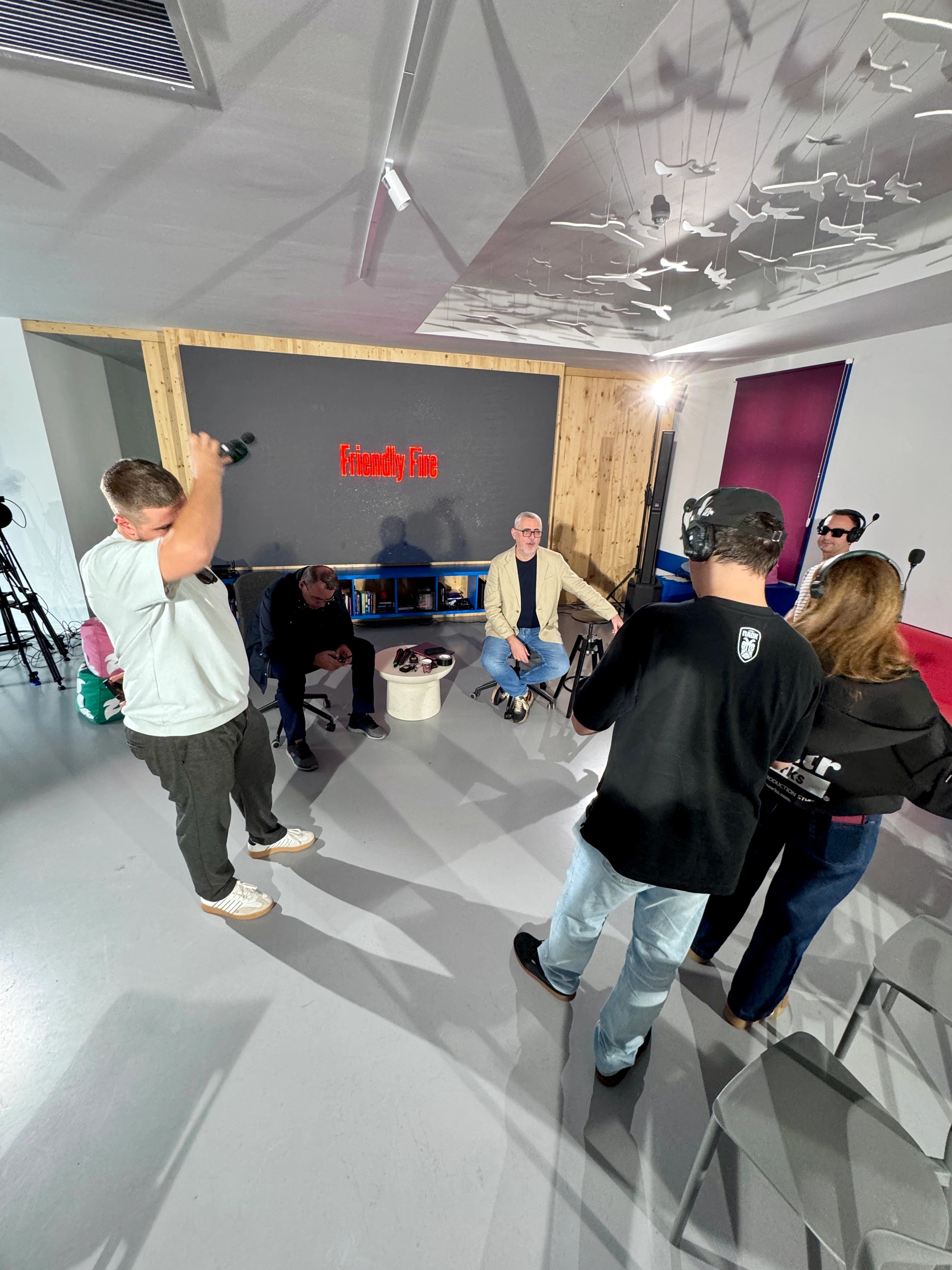
The technical deployment inside Zbor Hub Timișoara provided an environment equal to a dedicated television broadcast:
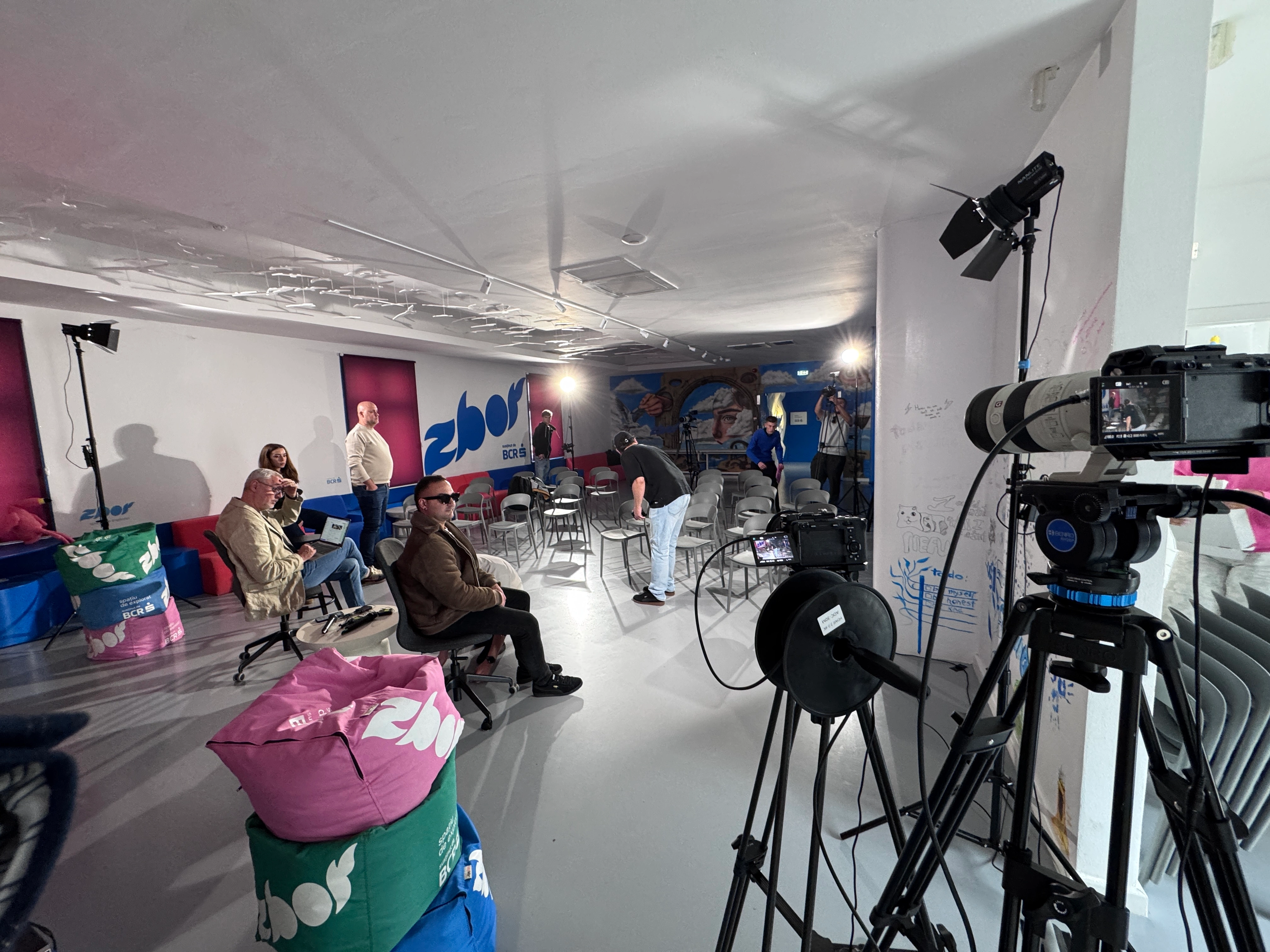
Cinema cameras mounted on heavy Benro tripods recorded every exchange between the stage and the audience. Nanlite Forza fixtures cast a warm, high-contrast glow over the room, while multi-channel audio capture ensured pristine vocal fidelity throughout.
10. Conclusion and My Mission as a Founder
The Friendly Fire session at Zbor Hub Timișoara cemented my core conviction that technological isolation is the real systemic risk. Passive resignation and alarmist narratives that treat artificial intelligence as an existential threat only guarantee economic irrelevance.
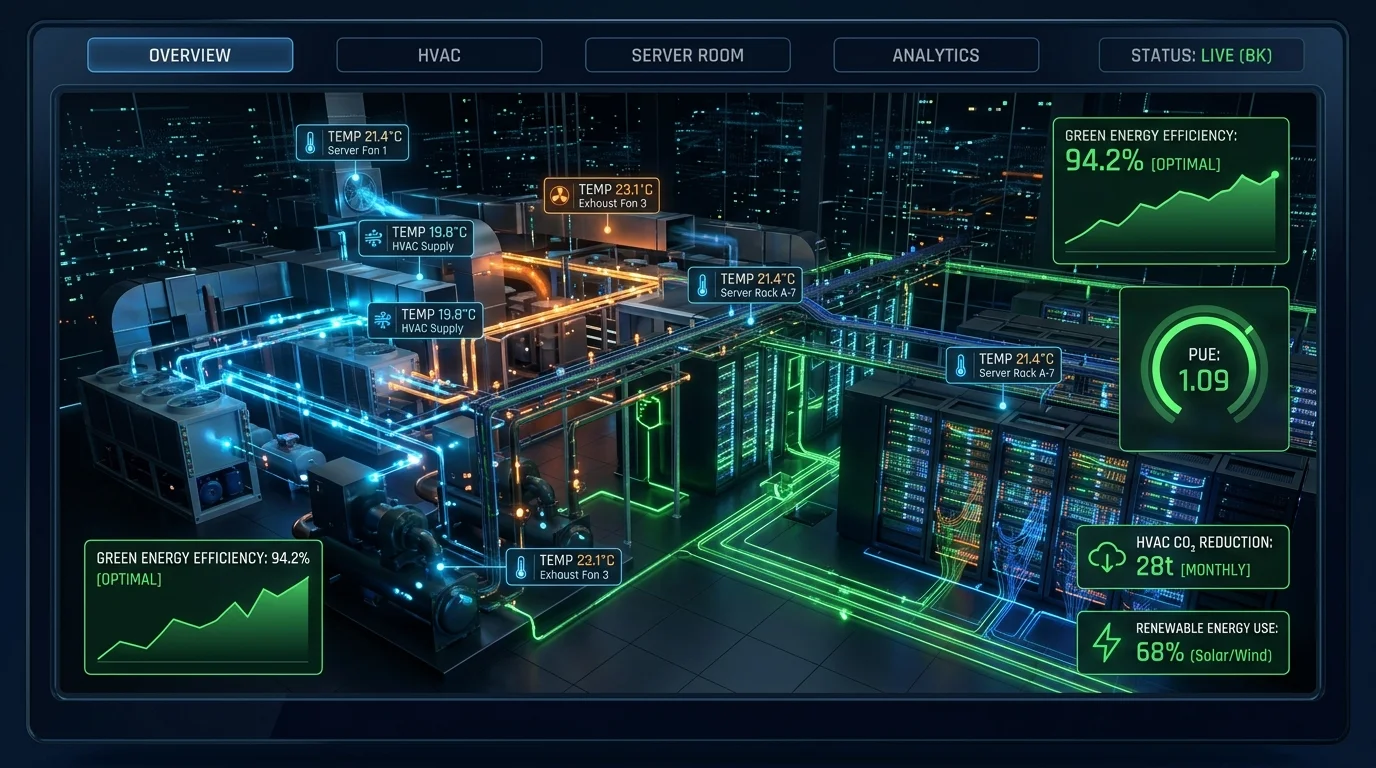
As a founder, I refuse to treat AI as a threat. Instead, I actively build and scale GlowSpaces AI as a tangible solution to industry problems and commercial market friction. By translating spatial complexity into actionable predictive models, we empower human enterprise rather than replacing it.
Technological isolation is the true systemic risk. Beyond alarmist narratives, progress belongs to builders who engineer practical architectures to overcome real-world friction.
Explore my work and examine how we build predictive spatial intelligence directly at https://glowspaces.ai.