Bridging Epochs: An Evening Walk Through Timisoara and the Future of 3D Digital Twins

Bridging Epochs: An Evening Walk Through Timisoara and the Future of 3D Digital Twins

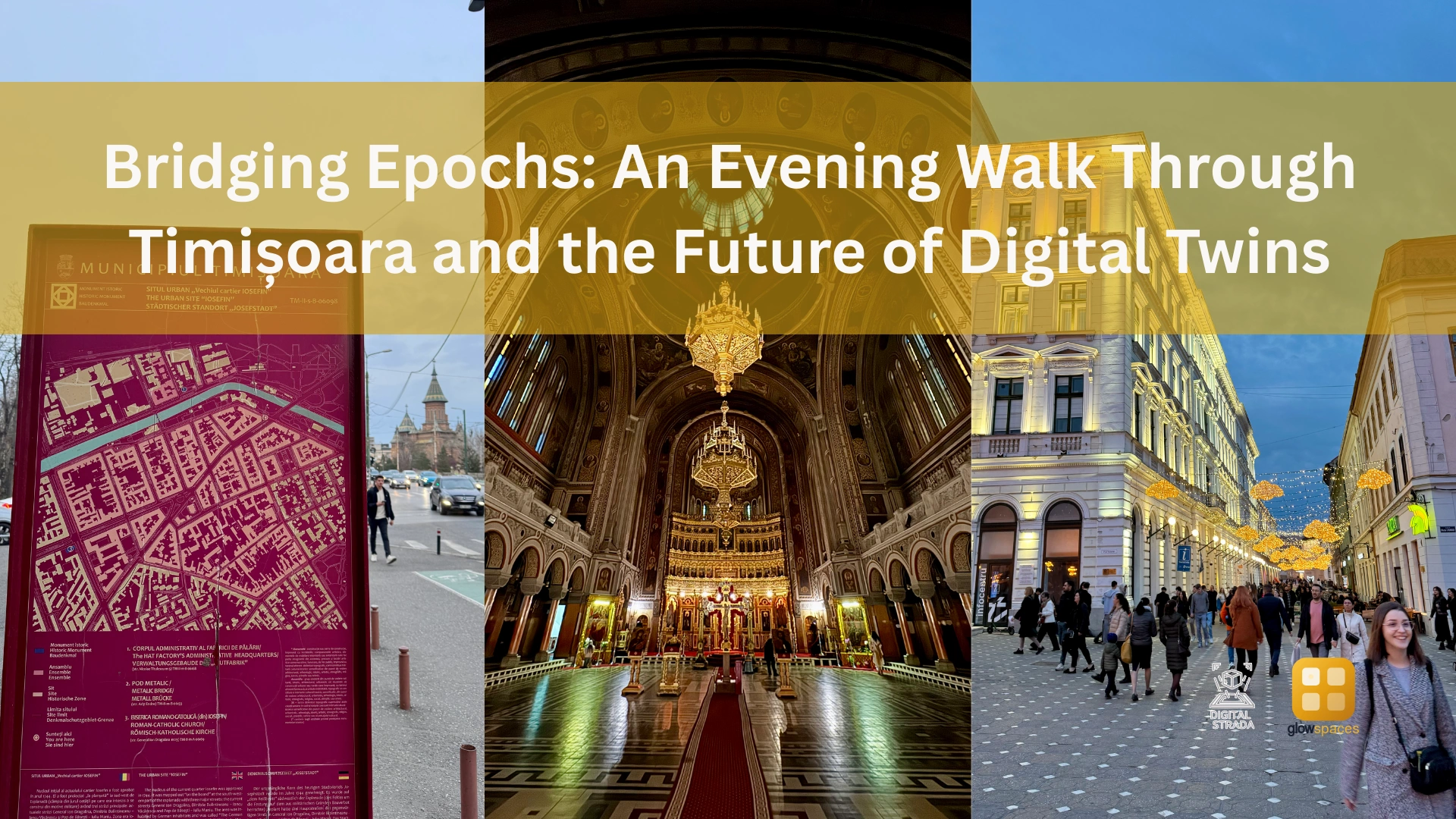
🏛️ The physical architecture of a metropolis functions as a silent, immutable chronicle of its historical evolution, and nowhere within Eastern Europe is this architectural dialogue more profoundly articulated than in the city of Timișoara. Defined by an unparalleled density of built heritage, the urban center holds the largest ensemble of buildings classified as historical monuments in Romania. On the evening of March 17, 2026, just hours before the inaugural “Immersive Heritage 2026” conference at the Politehnica University of Timișoara (UPT), I took a quiet walk through the city’s historic core. As dusk settled over Piața Victoriei and the Bega River canal, I captured the intricate Baroque and Secessionist facades with my camera. These casual evening photos serve as a powerful reminder of what we are fighting to preserve, and they perfectly frame the conversations we will be having over the next three days at the conference.

📸 Traditional methodologies of architectural documentation, historically reliant on two-dimensional blueprints and standard optical photography, consistently fail when confronted with the hyper-complex geometries of structures such as the illuminated Opera House or the monumental Metropolitan Orthodox Cathedral I admired last night. The visual beauty of these structures explicitly underscores the technological imperative for millimeter-accurate 3D Reality Capture. By envisioning the deployment of advanced Terrestrial Laser Scanning (TLS) networks fused with high-density LiDAR, the digital documentation process evolves beyond mere aesthetic visualization. At Digital Strada, we are actively constructing the “Golden Thread” of spatial data—an unalterable, mathematically precise digital shadow of the physical asset that guarantees structural integrity over time.

💻 This meticulous reality capture vision culminates in the generation of Heritage Building Information Models (HBIM), which now serve as the indispensable bedrock for all modern restoration and conservation efforts. By generating highly accurate point clouds, preservationists, structural engineers, and municipal architects are provided with a singular, incontrovertible source of truth. This technological paradigm shift entirely eliminates the costly guesswork inherent in the adaptive reuse of historic structures. It facilitates non-destructive structural analysis, enables advanced clash detection before physical construction begins, and allows for the seamless, invisible integration of modern technological amenities within highly protected historic shells.

🏢 However, the preservation of cultural heritage cannot exist in a financial vacuum; it demands sustainable, data-driven economic models to attract institutional capital. It is precisely at this intersection that the profound synergy between Digital Strada’s rigorous spatial capture and the GlowSpaces AI platform becomes evident. While Digital Strada architects the high-fidelity digital twin, the GlowSpaces intelligence engine ingests this raw spatial data to execute institutional-grade financial modeling. For real estate developers and urban planners seeking to revitalize Timișoara’s derelict palaces or industrial warehouses, GlowSpaces provides unparalleled predictive valuation and Capital Expenditure (CapEx) intelligence.

💡 By instantaneously cross-referencing proposed 3D layout alterations with real-time local contractor rates, wholesale material pricing, and strict regional heritage permit requirements, the platform generates precise, line-item renovation cost analyses. This transformative capability shifts a historic building from being viewed as a high-risk preservation liability into a verified, risk-mitigated financial asset, complete with a clearly defined spatial Return on Investment (ROI).

🚀 The timing of this evening walk was the perfect mental primer for the “Immersive Heritage” conference at UPT. The symposium focuses intently on how immersive technologies—spanning XR, AR, and VR—can radically transform historical sites into cutting-edge educational and research environments. Digital Strada’s documented successes in the region, including the precise digital twin and ClassVR integration for the “Sf. Ilie” Church, serve as practical, scalable blueprints for community engagement. Through the application of 3D Digital Twins, HBIM, and AI-driven PropTech, we are not merely preserving the past we admire on an evening stroll; we are actively architecting the digital infrastructure required to sustain Timișoara’s cultural and economic supremacy for the next century.

Timișoara Revoluționară: Why I am Betting on 3D Digital Twins and GlowSpaces to Build Our Global Innovation Hub

Timișoara Revoluționară: Why I am Betting on 3D Digital Twins and GlowSpaces to Build Our Global Innovation Hub

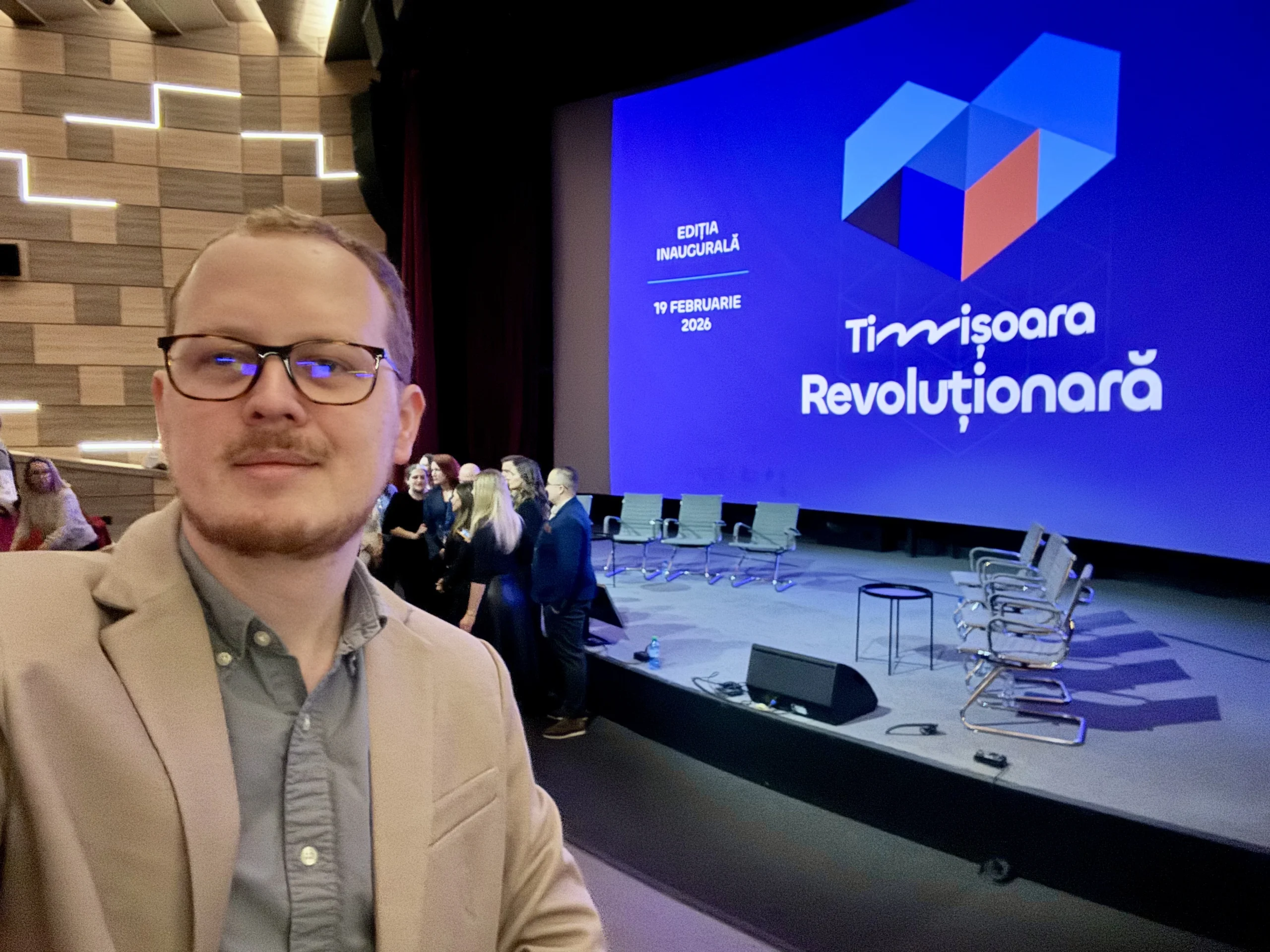
Two weeks ago, on 19th February, 2026, I joined the audience at Cinema Timiș. It was for the official launch of the project titled Timișoara Revoluționară.

I felt a profound shift in the very atmosphere of our regional business community.

For decades, we have rested on the laurels of being a city of firsts. We have often looked back at our revolutionary history to justify our current status.

I listened to the local administration and my fellow tech leaders. The message was unmistakable. Nostalgia is no longer a workable currency for a city that aims to lead the 21st century.

Today, we are not just a city that remembers a revolution. We are a city that produces one every single day. This is achieved through implementation, engineering excellence, and a relentless drive for performance.

Our local technology is now timing the Olympic Games to the hundredth of a second. It is securing global financial systems. It is also building the 4G networks that will soon power missions on the surface of the Moon.

At Digital Strada, I do not view this merely as a point of pride. I consider it a technical mandate. We are transitioning from being mere consumers of global innovation to being the architects of high-value digital infrastructure.

My vision is to guarantee this transition is anchored in a Golden Thread of 3D Digital Twins. This is a framework of implementation and precision. It will define Timișoara as a Global Innovation Hub through 2030.

Aligning with a Strategic Administration: The 1.4 Multiplier

Mayor Dominic Fritz described Timișoara as a magnet for innovation. He was not just using a catchphrase for a political campaign.

He outlined a causal chain that I believe must be the bedrock of our business community. Prosperity requires innovation.

While the administration highlights a chain of causality involving culture and respect, my professional conviction is that innovation is primarily driven by technical mastery, high-level intelligence, and engineering excellence: these are the true engines of progress.

Technical skills and sharp intelligence are not just additives: they are the primordial requirements for any Global Innovation Hub that aims to compete on the world stage.

I have seen this administration move from isolated, punctual projects. They are now focusing on long-term urban strategies. These strategies focus on quality of life and attractiveness. The efficiency of this approach is measurable and impressive.

In the last five years, our city has seen 500 million euros in investments.

By adding, on average, 1.4 RON in non-reimbursable funds for every 1 RON from the local budget, the administration has designed an environment.

This environment promotes high efficiency. This is exactly where I am positioning Digital Strada.

My 3D Digital Twin solutions are not just technical tools. They serve as the transparency layer. This is what public-private partnerships and European-funded projects need to succeed.

To be a true motor of dialogue between business and the public sector, we need a shared spatial truth. This will remove the friction of misaligned data. It will also reduce the high costs of spatial uncertainty.

Beyond Reality Capture: My Vision for Living Buildings

The revolution does not end when the reality capture of a site is finished. In fact, that is only the beginning of the building’s digital life.

Through Digital Strada, I am moving beyond simple 360-degree tours to deliver what I call an Advanced Facility Operating System.

My Facility Management solutions turn a static 3D model into an active management hub.

I integrate IoT control, asset management, and maintenance scheduling via our STAGES platform. This provides facility managers with a searchable digital audit trail.

This is the Golden Thread. It replaces dusty paper binders with real-time operational reality.

This ensures that safety and efficiency are maintained for the entire lifecycle of the asset.

Furthermore, I am deeply committed to our architectural past through our Immersive Heritage Solutions.

I treat the digital twin as an information container.

It is often referred to as HBIM.

This links historical archives and high-density LiDAR data to protect our cultural landmarks.

Whether it is a 1930s Art Deco villa or a large-scale fortress, I guarantee our history is preserved. It becomes a searchable digital asset.

This allows users to effectively teleport into our heritage using VR and AR.

This technology creates a bridge between our revolutionary past and our technological future.

We are not just recording history: we are making it accessible and resilient against the passage of time.

Incubating the Future of PropTech: GlowSpaces

Digital Strada is implementing the digital twin of the as-is environment.

My newest venture, GlowSpaces, aims to solve the systemic disconnect between physical spaces and their investment potential.

This startup is the culmination of years spent understanding the friction points in Real Estate and AEC.

We have identified that the biggest hurdle for large-scale investment is the lack of institutional-grade visualization and financial modeling.

GlowSpaces is an AI-powered platform designed specifically for the Real Estate and AEC industries.

It transforms raw spatial data into verified financial models, synthesizing predictive valuation and luxury staging.

It empowers investors to visualize ROI before a single brick is moved.

This effectively merges the accuracy of engineering with the persuasion of high-end design.

This is the implementation of AI the market has been waiting for. It reveals hidden capital. It deploys it with absolute precision.

I invite you to explore the future of PropTech and join our community at http://glowspaces.co.uk to see how we are redefining investment transparency.

The Startup Reality Check: From Grants to Implementation

We must be honest about our startup ecosystem. For years, our region was shaped by a grant mindset. This mindset often lacked rigorous performance metrics.

The launch of Vest Ventures, the 16.6 million euro regional venture capital fund, is the maturity signal we have been waiting for. We are finally moving toward an equity mindset where scaling, implementation, and product-market validation are the only metrics that matter.

I embrace this shift at Digital Strada by delivering high-density 3D precision as our default standard.

In the AEC sector, data that is just good enough leads to expensive rework and wasted capital. I offer high-density E57 point clouds. These act as the digital baseline. This allows both startups and industrial giants to build with absolute certainty.

We are replacing the old adage of measure twice, cut once with a new standard: model once, build confidently. This is how we confirm that Timișoara becomes a Global Innovation Hub that actually delivers on its promises.

Conclusion: Leading the Transition to 2030

The next five years will be defined by how we integrate Artificial Intelligence. We will also incorporate the Industrial Internet of Things and high-fidelity 3D Digital Twins into our everyday workflows.

I am building the digital infrastructure that will define Timișoara’s next decade. Our city is prepared to become a Global Innovation Hub.

We need to have the courage and build it on a foundation of reality capture. Rigorous implementation is also essential.

The future is indeed here in Timișoara. It belongs to those of us who build it on data and implementation, not just on promises. I am ready to lead this transition. Let’s build the future together.

Keep in Touch & Connect

I am seeking to connect with visionary leaders in Real Estate development. These leaders appreciate heritage preservation and industrial reconstruction. They demand precision and transparency.

If you are looking for a single source of truth for your next project, let’s talk.

Connect with me on LinkedIn: Emil Indricău 🤝

Explore our AEC Solutions: digitalstrada.com/aec 🚀

Join the GlowSpaces Revolution: glowspaces.co.uk 💡

Timișoara Revoluționară (@timisoara.revolutionara) – Instagram
144 Followers, 8 Following, 14 Posts – Timișoara Revoluționară (@timisoara.revolutionara) on Instagram: “Platforma Municipiului Timișoara prin Visit …

Primăria a lansat proiectul ‘Timișoara Revoluționară’ – orașul care …
20 Feb 2026 Foto: Primăria Municipiului Timişoara. A- A A+. Primăria Timișoara a lansat oficial, joi seara, proiectul ‘Timișoara Revoluționară‘, o …

Leverage 3D Scanning and HBIM for Traditional Buildings | IHBC & STBA CPD

Leverage 3D Scanning and HBIM for Traditional Buildings | IHBC & STBA CPD

🎓 I attended the IHBC-recognised STBA and IHBC CPD webinar “3D Scanning, Heritage BIM (Building Information Modelling) and the evolving role of AI for traditional and historic buildings” on 26 September 2025, receiving up to one hour of recognised CPD, and this article sets out how I will apply the learning in a measured, phased way in Northern Ireland.

🏛️ The session positioned conservation practice as evidence led, with IHBC introducing its UK-wide professional remit and STBA outlining its responsible-retrofit focus and guidance resources, a useful backdrop for choosing the right level of digital capture per building and per decision.

🧭 Presenters Nick Blenkarn and Professor David Heesom walked through fast web-shareable capture, higher-accuracy laser scanning, and HBIM uses, which helped me map capabilities I have today and those I will develop through pilots and partner collaborations.

📸 For now, my first step on most heritage briefs is orientation-grade, image-based capture and remote walkthroughs, a lightweight method that helps stakeholders understand constraints, plan access, and reduce unnecessary site revisits before commissioning heavier survey effort when the decision requires it.

🧱 The webinar clarified that scan-to-BIM is still a deliberate, manual process that traces model geometry over the point cloud, which reinforced my plan to scope higher-accuracy tasks carefully and, when needed, bring in accredited survey partners rather than attempt everything in-house on day one.

📐 HBIM was framed as a long-running evolution of BIM applied to historic fabric, active in research and practice since about 2009, with UK guidance available, which I will reference when shaping information requirements and deciding where a simple model ends and an information-rich HBIM begins.

🧩 A key mindset shift for me is to treat the model as an information container, not only geometry, linking archives and oral histories to specific spaces and elements so choices are traceable, an approach illustrated in the Wolverhampton market-street case.

🚚 The translocation example at Avoncroft Museum showed how unique IDs, QR or barcodes, and a simple database can track each component from dismantling to pallet and reconstruction, a robust workflow I can adapt with partners when projects demand that level of control.

🛰️ I also learned where SLAM, handheld units, terrestrial scanners, and drone photogrammetry each fit, including their limits, for example SLAM struggling on feature-poor spiral stairs and the need for tripod scans as a backbone, insights I will apply by choosing the right partner or rental path when accuracy and access justify it.

🏗️ The “multimodal mosaic” idea, where different datasets are reconciled into a coordinated whole, is the direction I plan to move toward through pilot projects, starting with scoped externals and interiors and then, as needed, augmenting with specialist capture to prepare data that is HBIM-ready.

🧠 On AI, I took a pragmatic view from the webinar, use it where it reduces error or time, such as colour balancing or change detection, while keeping provenance visible, a rule I will apply to any future automation in heritage contexts.

🔎 Digital twin terminology was clarified, with a useful distinction between a visual “digital shadow” and a twin that both reads and affects the physical asset, which guides how I describe current capabilities and plan staged integrations with web viewers and sensors when a project truly requires it.

🧰 In practice for clients, my present offer focuses on consultative scoping, orientation-grade capture, and stakeholder walkthroughs, then, if tolerances, compliance or risk call for it, I will propose a partner-delivered measured survey and model production aligned to HBIM guidelines, with all sources and decisions documented for audit.

Driving Positive Change: Matterport’s CEO Charts a Greener Path with Digital Twins for a Sustainable Future

Driving Positive Change: Matterport’s CEO Charts a Greener Path with Digital Twins for a Sustainable Future

In his recent letter, Matterport’s Chairman and CEO, R J Pittman, addresses the multifaceted challenges faced by businesses and the world over the past year. He emphasizes the significance of the current era, marked by uncertainty but also abundant opportunities for positive change. Pittman outlines Matterport’s pivotal role in addressing global challenges, working towards a brighter future, and contributing to a better world for the next generation.

Matterport’s Digital Twin Platform takes center stage in this commitment. It goes beyond mere property visualization, fundamentally altering how people interact with and understand their surroundings. The core values of accessibility, inclusivity, and sustainability are not just buzzwords but integral aspects of Matterport’s business model, deeply embedded in its values, workplace culture, and overall ethos. Pittman stresses that this commitment to Environmental, Social, and Governance (ESG) principles is the driving force propelling Matterport forward.

The technology itself, with its 3D digital twins and AI data capabilities, is hailed for its positive impact in connecting the world. Pittman proudly notes that this technology is freely accessible to anyone with a smartphone. An exemplary initiative, the Exploration to Equity philanthropic program, opens virtual doors to cultural and historic sites, bringing them to life for those who might not have the opportunity to experience them in person. Simultaneously, it aligns with Matterport’s goal of democratizing access to physical spaces.

For Matterport’s customers, the journey starts with a digital twin, offering unique insights and versatile assets. This empowers effective property marketing, management, and construction processes. The technology’s potential to digitally transform operations in the vast landscape of existing buildings and structures worldwide, numbering approximately four billion, is underscored. The AI-powered capabilities, driven by Matterport’s technical leadership in spatial data, computer vision, and deep learning, facilitate faster and smarter decision-making. Furthermore, the introduction of new automated capabilities serves the dual purpose of reducing the need for frequent site visits and contributing significantly to customers’ sustainability goals.

Pittman provides a glimpse into the future through innovations that expand the application of digital twins, enabling customers to address an array of business-critical questions swiftly from anywhere in the world. A notable highlight is the upcoming tool designed to help customers measure their carbon emissions reduction, emphasizing Matterport’s commitment to sustainability and environmental responsibility.

Internally, Matterport has taken substantial steps in its ESG journey. The release of the first ESG Report in 2022 was a significant milestone, showcasing the company’s commitment to transparency. Efforts to reduce the carbon footprint involved scrutinizing facilities, setting clear expectations for suppliers, and revamping the entire Pro3 camera supply chain for enhanced sustainability. The partnership with an external carbon accounting firm demonstrates a commitment to continually understand and improve the company’s environmental impact.

Pittman concludes the letter with a personal touch, expressing a deep belief in Matterport’s purpose and potential. He acknowledges the global Matterpeeps, the driving force behind the company’s innovation and dedication to creating a positive impact. Proud of the accomplishments in 2022, Pittman looks ahead with optimism, expressing a commitment to further improvements in the days and years to come.

Source: matterport.com

See our Digital Twins portfolio and Contact us for a new project.

🎉 Help your customers to Experience Immersive Communication with a Digital Twin for your hotelresortrestaurantmuseumfactory or space.

☎️ Leave a comment with your tourism business name and let’s connect destinations around the world.

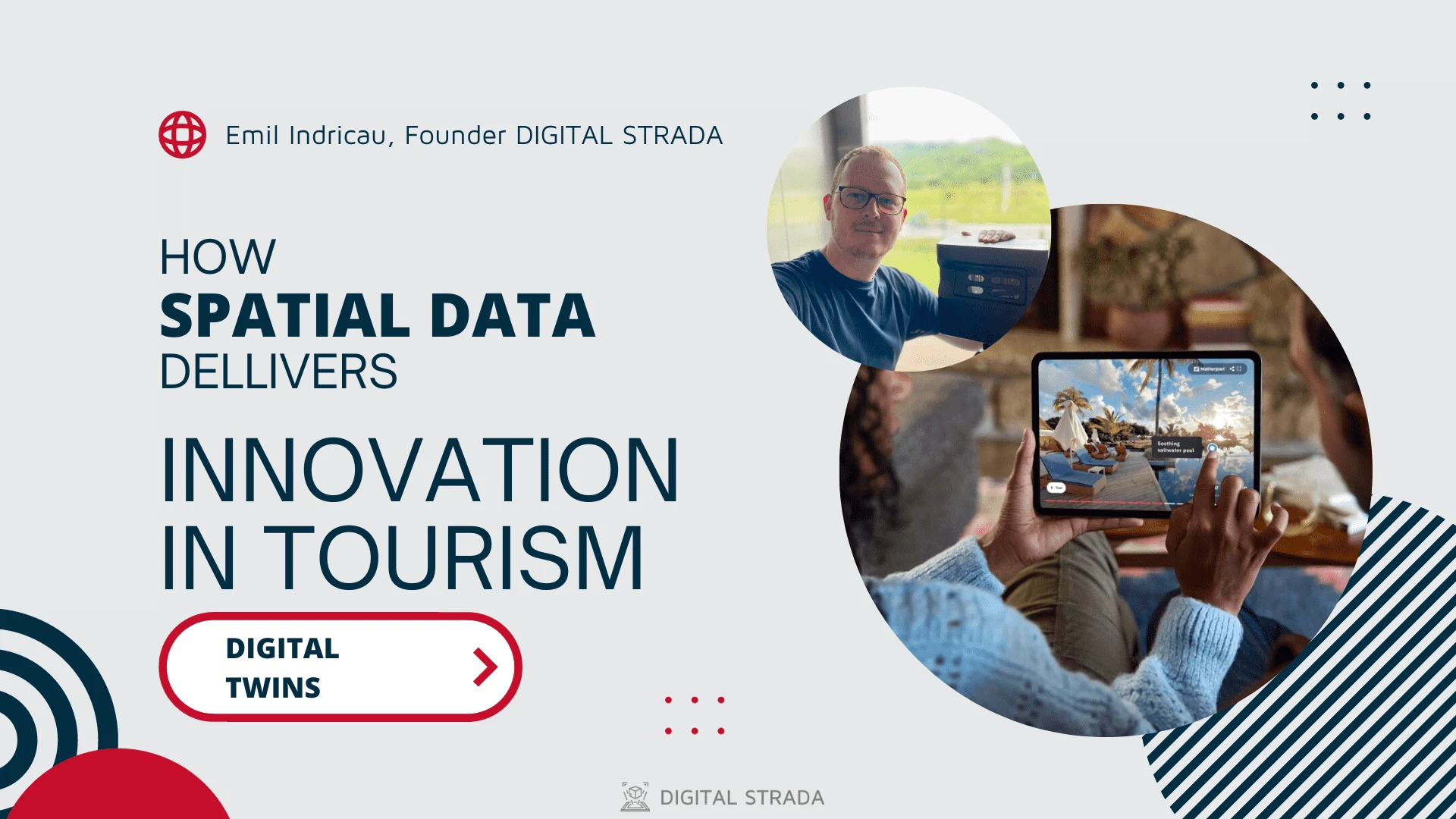
How Spatial Data delivers Innovation in Tourism with Digital Twins

How Spatial Data delivers Innovation in Tourism with Digital Twins

Spatial Data will revolutionize Tourism Destinations.

Why Digital Innovation in Tourism – Digital Twins from Digital Strada by DIGITAL STRADA
Spatial data, often referred to as geospatial data, is poised to become a goldmine for destination managers and tourism boards worldwide. The ability to virtually transport hotels and resorts to any corner of the globe, providing immersive experiences before booking, will open up new dimensions in destination promotion. As technology advances, this three-dimensional (3D) transformation of tourism marketing promises to revolutionize the industry.

🌎 Being able to “teleport” your hotel or resort anywhere around the world and offer an Immersive experience before booking will be valuable and will launch new possibilities to promote Destinations in 3D.

🌎 Immersive Destination Promotion: Imagine being able to “teleport” your hotel or resort to potential travelers, enabling them to explore and experience the destination in 3D before making a booking. This innovative use of spatial data can be a game-changer in the tourism industry. Destination managers can showcase their offerings in a more engaging and interactive way, allowing travelers to virtually step into the destination, see the accommodations, and even explore nearby attractions, all from the comfort of their own screens.

Expanding on this idea: 🏞️ Destination managers can collaborate with local businesses, tour operators, and tourist attractions to create comprehensive 3D experiences for tourists. This collaborative approach will not only benefit travelers but also boost the local economy.

🧳 Tourism boards from different continents can join hands to create global tourism showcases, where travelers can explore a diverse range of destinations in a single virtual space. This interconnected approach can drive tourism interest and collaboration on an unprecedented scale.

🌐 Emerging technologies like virtual reality (VR) and augmented reality (AR) can be harnessed to make these immersive experiences even more engaging. Imagine taking a virtual walk through the cobbled streets of an old European town or snorkeling in the crystal-clear waters of a tropical paradise—all from the convenience of your own home.

👩‍🏫 With a digital replica of your buildings, spaces and places, as manager or owner, you can scale and improve training and induction in the HoReCa industry.

👩‍🏫 Enhancing Training and Induction in the HoReCa Industry: Beyond marketing, spatial data has profound implications for the hospitality and restaurant (HoReCa) industry. Having digital replicas of buildings, spaces, and places can significantly improve training and induction processes for employees.

Here’s an expansion on this concept: 🍽️ In the HoReCa industry, it’s crucial to ensure that employees are well-versed in the layout, design, and functionality of the establishment. With 3D models and immersive training experiences, staff can familiarize themselves with the property and its facilities even before their first day on the job.

👨‍🍳 This technology can also be used for culinary training, where chefs can practice their craft in a virtual kitchen or restaurant setting, helping them hone their skills and improve efficiency.

📊 Data analytics can be integrated into these immersive training experiences, allowing managers to track the progress of their employees and identify areas for improvement. This data-driven approach can lead to more effective training programs and ultimately enhance the quality of service.

⛪️ Buildings Restoration and Rehabilitation using 3D will bring a new dimension of accurate documentation and will help to preserve cultural Heritage.

⛪️ Preserving Cultural Heritage through 3D: Spatial data’s influence isn’t limited to the tourism and hospitality sectors; it extends to the realm of cultural heritage preservation as well. The use of 3D technology for the restoration and rehabilitation of historical buildings and sites offers a new dimension of accuracy and documentation.

Further insights on this topic: 🏛️ Historical buildings, monuments, and archaeological sites often require meticulous restoration and documentation to preserve their cultural significance. 3D scans and models can capture every intricate detail, aiding in the restoration process and ensuring that heritage is safeguarded for future generations.

🌍 Collaborative efforts between heritage preservation organizations and technology experts can lead to the development of comprehensive databases of historical sites. These databases can be invaluable resources for researchers, educators, and heritage enthusiasts, enabling them to explore and study cultural treasures in unprecedented detail.

🧰 3D documentation can also facilitate remote assessment and restoration planning. Experts from different parts of the world can virtually inspect and discuss the condition of a historical site, making international cooperation in heritage preservation more accessible.

📖 Facility Management for tourism will be improved in 3D, compared with current 2D information from facility management manuals.

📖 Facility Management Advancements in 3D: Facility management in the tourism industry is set to witness a transformation, as 3D data takes center stage. Compared to the current reliance on 2D information from facility management manuals, the shift to 3D promises a leap in efficiency and accuracy.

Expanding on this aspect: 🏨 Facility managers in hotels and resorts can access 3D models of their properties, allowing for more detailed and intuitive assessments of maintenance and repair needs. This not only streamlines the maintenance process but also reduces the chances of errors and miscommunication.

🛠️ With the integration of IoT (Internet of Things) sensors and 3D data, facility management can become predictive. These sensors can detect issues like equipment malfunctions or water leaks, and the 3D models can help pinpoint the exact location of the problem, expediting the resolution process.

💼 Property owners and managers can create digital twins of their facilities, which are virtual replicas mirroring the real-world properties. These digital twins can be used for scenario planning, energy optimization, and assessing the impact of changes before they are implemented.

🏨 You will be able to trully “see” a space and visualize it. This will make collaboration smoother and friction-free.

🏨 Streamlined Collaboration in Tourism: The adoption of 3D technology in tourism and facility management doesn’t stop at improving internal processes; it also enhances collaboration within the industry. The ability to “see” a space and visualize it in 3D can make cooperation smoother and friction-free.

Here are further insights into this collaborative aspect: 📊 Destination managers can share their 3D models with local businesses, event organizers, and government agencies, fostering a more integrated approach to tourism development. This can lead to coordinated marketing efforts, infrastructure improvements, and enhanced visitor experiences.

🚗 Transportation providers, such as airlines, train operators, and car rental agencies, can collaborate with destination managers to offer seamless travel experiences. 3D models of airports, train stations, and rental car facilities can help travelers navigate with ease.

🌍 International collaboration becomes more accessible as destination managers and tourism boards from different parts of the world can exchange 3D data to jointly promote their offerings. This opens the door to cross-continental tourism campaigns and shared initiatives for sustainable tourism practices.

🥽 Revolutionizing Tourism Expositions: Traditional tourism and holiday expos and expositions are set to undergo a transformation with the incorporation of 3D technology. Exhibitors can present and immerse visitors in their destinations right at the expo venue stand, creating a more engaging and interactive experience.

Let’s delve further into this exciting development: 🌆 At expos, destination managers can set up virtual reality booths where visitors can explore their destinations in immersive 3D. This not only captures the attention of potential travelers but also provides an opportunity to showcase unique experiences, such as adventure sports or cultural festivals.

🌐 For attendees who cannot physically attend expos, virtual events and exhibitions can replicate the experience online, allowing travelers to interact with destination representatives, learn about special offers, and explore 3D models from the comfort of their homes.

🗺️ Spatial Data for Tourism Destinations will become a goldmine for destination managers but also for Tourism Boards even from different continents.

💼 Tourism boards and destination managers can use expos as a platform to launch new products, services, and promotions. Whether it’s the opening of a new resort, a special tour package, or eco-friendly initiatives, 3D presentations can make these launches more memorable and impactful.

In conclusion, spatial data is set to revolutionize the tourism industry, offering new avenues for immersive destination promotion, enhanced employee training, heritage preservation, efficient facility management, streamlined collaboration, and dynamic tourism expositions. As technology continues to advance, the travel and tourism sector will witness a shift toward more interactive, data-driven, and visually, and visually engaging experiences, ultimately benefiting both industry stakeholders and travelers seeking unforgettable journeys.

✌️ Let’s change “will” to “are”. Bring the future in your destination. Prepare a Sustainable tourism Strategy.

🎉 Help your customers to Experience Immersive Communication with a Digital Twin for your hotelresortrestaurantmuseumfactory or space.

☎️ Leave a comment with your tourism business name and let’s connect destinations around the world.

Pin It on Pinterest